
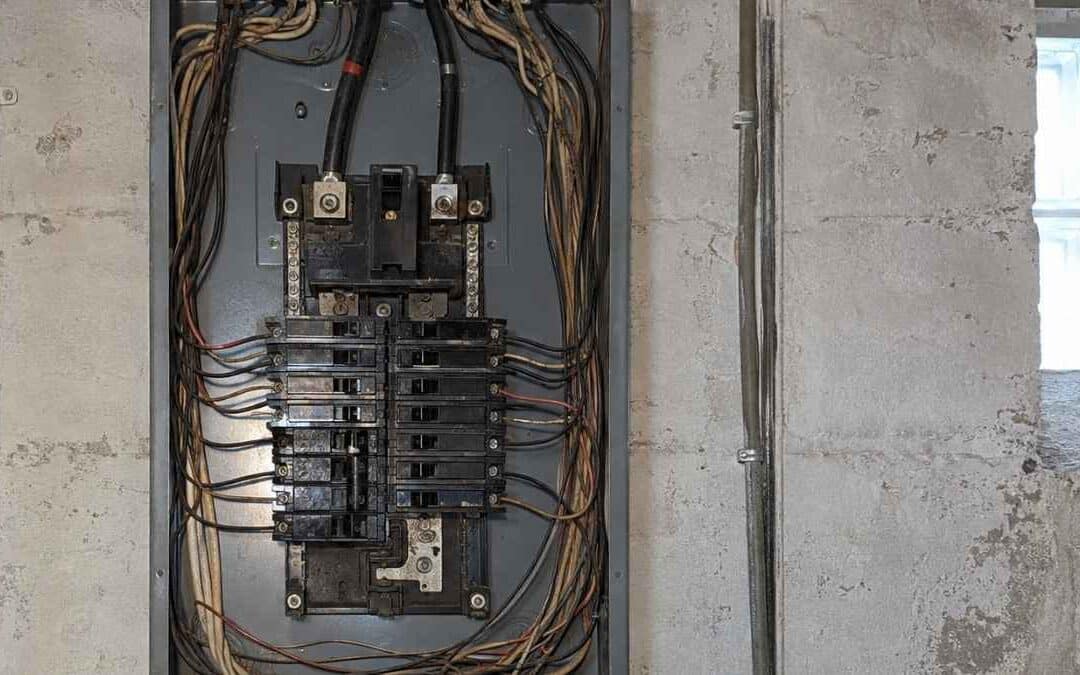
Electrical panel warning signs are the symptoms a home’s service panel gives off when it is overloaded, failing, or no longer safe to run. These are the smells, sounds, heat, or behavior that tell you the panel needs attention before it becomes a fire or shock hazard. The service panel is the steel box, often mounted in an unfinished basement or a back hallway in the older brick homes common across St. Louis City, where power from the utility splits into the circuits that feed the house. When it starts to fail, it rarely does so silently. It warms to the touch or gives off a burning smell, the two signs that most often mean the damage is already underway.
Some of these signs are a nuisance you can schedule around. Others mean you stop using the panel tonight. This guide walks through the specific signs a failing panel shows, what each one means about the electrical fault behind it, and when a sign crosses from something you monitor into something that means call a licensed electrician now.
How Can You Tell If Your Electrical Panel Is Failing?
A failing electrical panel shows itself through breakers that trip repeatedly, a burning or fishy smell, warmth on the panel surface, scorch marks, buzzing, or lights that flicker across the whole house. Any one of these means the panel needs a licensed electrician to inspect it.
Each sign points to a different fault inside the panel or the service feeding it, which is why one rule covers all of them. Any one of them is enough.
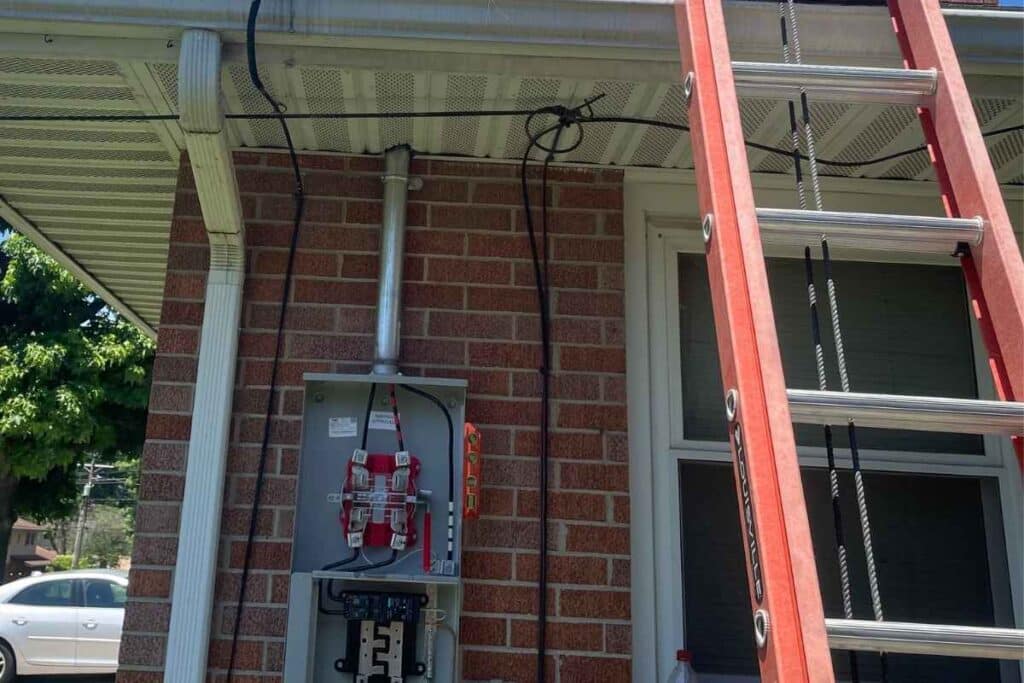
- Repeated tripping: a breaker that trips again and again, on the same circuit or across several, points to an overloaded circuit or a panel that cannot carry the home’s load.
- Burning or fishy smell: an odor at the panel means plastic or insulation is overheating inside, which is an active fire risk.
- Warmth or heat on the surface: a panel cover that feels warm signals excess electrical resistance behind it, usually a loose connection or failing breaker.
- Scorch marks or discoloration: char, soot, or melted spots on the panel or nearby outlets are physical evidence of past or ongoing arcing.
- Buzzing or sizzling: sound coming from the panel means current is jumping a loose or damaged connection instead of flowing through it.
- Whole-house flicker: lights that dim or flicker in rooms across the house, not one fixture, trace back to a loose panel connection or an overloaded service.
Not every sign carries the same urgency. In the older homes common around St. Louis, an aging service panel often develops more than one of these faults together, and each one raises the risk the others carry. Some let you schedule an inspection on your own timeline. Others, the ones tied to heat, smell, or arcing, mean you stop using the panel and call an electrician the same day. The rest of this guide sorts each sign by what it means and how fast it needs a response.
Why Do Your Circuit Breakers Keep Tripping?
Breakers trip to cut power when a circuit draws more current than it is rated for, so occasional tripping is protection working exactly as designed. Tripping that repeats on the same circuit, spreads across several circuits, or will not reset is the real warning sign: it points to an overloaded circuit, a failing breaker, or a panel that cannot carry the home’s load.
A healthy trip is a one-off. You plugged a space heater into a circuit already running a microwave, the breaker cut power, and it held once you moved the heater. That is the breaker doing its job.
The pattern that signals a problem is repetition. A breaker that trips every day on the same circuit is telling you that circuit is overloaded, drawing more than its rating again and again. Trips that jump across several circuits point to the panel or the main service, not one appliance. A breaker that will not reset at all usually means one of two things: the breaker has failed, or it still senses a fault on the line, either a short circuit, where two wires touch directly, or a ground fault, where current escapes to ground. In both cases it is holding the circuit open on purpose.
Older panels trip more often now because homes ask far more of them than they were built to handle. A single-family home’s electrical service must be rated at least 100 amperes under the National Electrical Code, the floor set by NEC 230.79, and for decades a 100-amp panel was plenty.
Today’s high-draw additions change that math. A Level 2 EV charger pulls 40 amps on its own, close to half a 100-amp service before the rest of the house is counted. Add a heat pump, an induction range, or a second EV, and a panel sized for a 1970s household runs at its ceiling. Breakers then trip not because anything is broken, but because the panel is delivering all it can. Many older St. Louis homes still run on these original 100-amp services, which is why a panel upgrade tends to come up the moment an EV charger or electric appliance enters the picture.
What Do Smells, Sounds, and Heat From Your Panel Mean?
A panel warns you through three senses: a burning or fishy smell signals overheating insulation, buzzing or sizzling signals arcing at a loose connection, and a warm or hot enclosure signals dangerous internal resistance. Each has its own cause and its own urgency, covered below.
Why Does Your Electrical Panel Smell Like Burning?
A burning or fishy smell from an electrical panel means insulation or plastic components are overheating, usually from a loose connection or an overloaded breaker. Stop using the panel and call a licensed electrician right away. This is an active fire risk.
The fishy part is the clue. Wire insulation and the heat-resistant compounds inside breakers and outlets give off a distinct fish-like or urine-like odor as they cook, and no common household source smells the same way. The chain behind it is short: a loose or overloaded connection creates electrical resistance, resistance creates heat, and heat breaks down the plastic around the connection. By the time the smell reaches you, a component has already gotten hot enough to start degrading. That is why a burning smell is never a reset-the-breaker-and-wait situation.
Leave the panel closed. Do not open it or try to find the source yourself, because the live parts inside can shock or burn, and shut off power at the main breaker only if you can reach it safely before calling an electrician. If you see smoke or scorch marks, treat it as a fire and call 911.
Why Is Your Electrical Panel Buzzing or Making Noise?
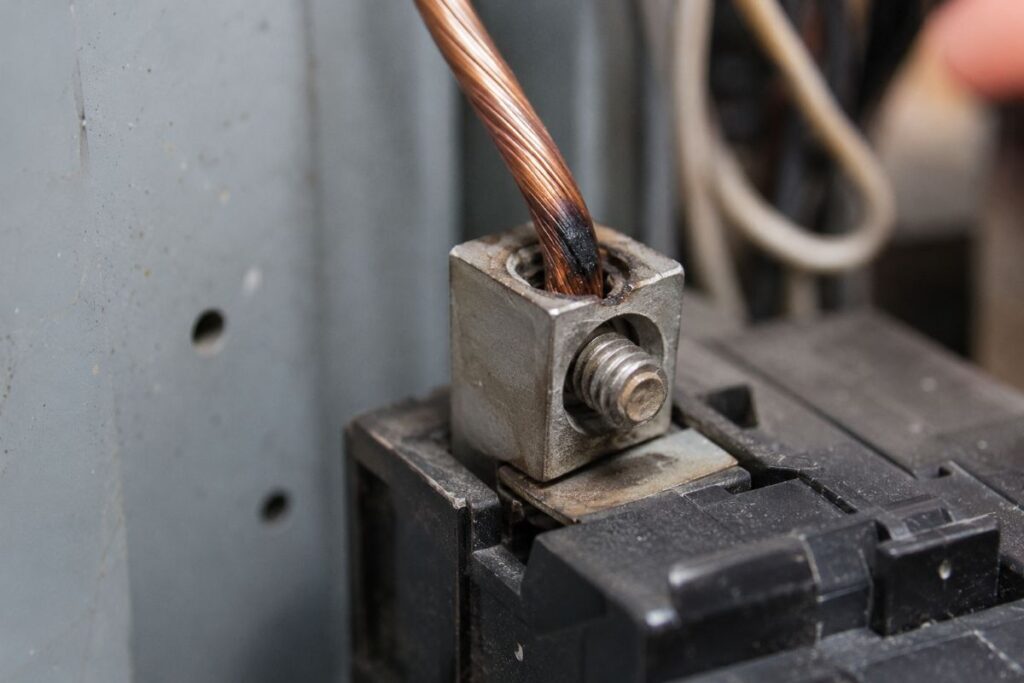
A faint, steady hum from a panel can be normal, but loud buzzing, crackling, or sizzling means electricity is arcing across a loose or damaged connection. Arcing throws off intense heat and is a leading cause of electrical fires, so a buzzing panel needs immediate professional inspection.
The test is the sound itself. Household current cycles sixty times a second, and that cycling can produce a quiet mechanical hum in the main breaker, so faint that you have to put your ear near the panel to hear it. That is usually nothing. What is not normal is a loud buzz, a crackle, or a frying, sizzling sound from a single breaker.
Those mean current is jumping a gap it should not be jumping, arcing across a screw or lug that has worked loose over years of heating, cooling, and vibration. Arcing matters because of what it produces: the jump generates localized heat far above what the connection was built for, and heat inside a closed panel is how electrical fires start. The Electrical Safety Foundation and the NFPA both link arcing connections directly to home fires.
A loud or growing buzz, especially paired with heat or a burning smell, is not a nuisance to live with. Shut off the main if you can reach it safely and call a licensed electrician.
Why Is Your Electrical Panel Hot to the Touch?
An electrical panel cover should never feel warm or hot. Heat at the surface means excess electrical resistance somewhere inside, usually a loose lug or a failing breaker, and it signals that the panel is overheating internally and needs inspection right away.
A healthy panel runs at room temperature. The metal cover, called the dead front, sits between you and the energized components, and under normal load almost no heat reaches it. When the surface feels warm, current is meeting resistance it should not, most often at a lug where a conductor lands on the bus or a breaker, and that resistance turns electrical energy into heat.
The warmth you feel on the cover is the outer edge of something running much hotter inside. Heat you can feel is a late-stage warning, not an early one, because a loose or corroded connection heats under load, degrades, then heats more, so the fault worsens the longer it runs. In the older St. Louis homes still on decades-old panels, that slow degradation has often been building unnoticed for years before the cover ever feels warm.
Do not open the panel or touch the breakers to investigate, since the parts behind the cover can shock or burn. Shut off the main breaker if it is safely reachable, keep load off the panel, and have a licensed electrician find the source.
What Do Flickering Lights and Scorch Marks Tell You?
Lights that flicker or dim across multiple rooms, not just one fixture, often signal a loose panel connection or an overloaded service rather than a bad bulb. Scorch marks, discoloration, or melted spots on the panel or outlets are direct evidence of overheating and arcing.
The pattern separates a harmless flicker from a dangerous one. One is about the bulb; the other is about the panel or the service feeding it.
- One fixture flickers: usually a loose bulb, a worn switch, or a failing fixture. Localized to that spot and low-risk.
- Lights flicker across several rooms: the cause is upstream at the panel, the main connection, or the utility feed, not any single bulb.
- Some lights brighten while others dim: a hallmark of a loose neutral, the shared return wire for the whole house. This one is dangerous.
- Flicker deepens when a large appliance starts: an AC or dryer causing a brief, slight dim can be normal; frequent or deep dips are not.
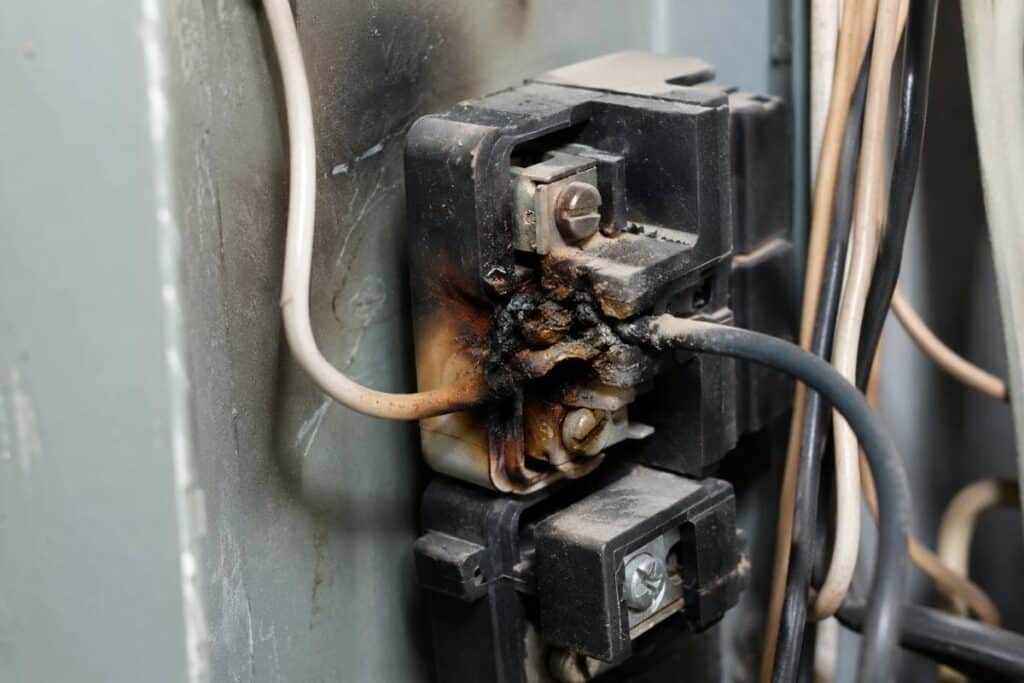
- Any scorch, char, or melted spot on the panel or an outlet: direct evidence that arcing has already occurred at that connection.
A loose neutral is the sign to treat most seriously. The neutral is the wire that carries current back and balances the load between the two sides of the panel. When it works loose, the voltage swings, spiking high enough on one side to damage electronics and dropping on the other. In many older St. Louis homes the neutral loosens where the service connects at the meter or the panel, after decades of thermal cycling on the original service, which is why whole-house flicker in these homes points at the connection before the bulbs.
That instability is both a fire risk and a shock risk. Scorch marks carry the same weight for a different reason: discoloration or melting means a connection has already run hot enough to burn, so any visible burn evidence is an act-now sign, not something to monitor.
Which Old Panel Brands Are Considered Unsafe?
Federal Pacific Electric (FPE) Stab-Lok and Zinsco/Sylvania panels are widely documented as fire hazards because their breakers can fail to trip during an overload or short, and a fuse box signals a service too old for modern loads. Homes in St. Louis’s older neighborhoods frequently still have these and should have them evaluated by a licensed electrician.
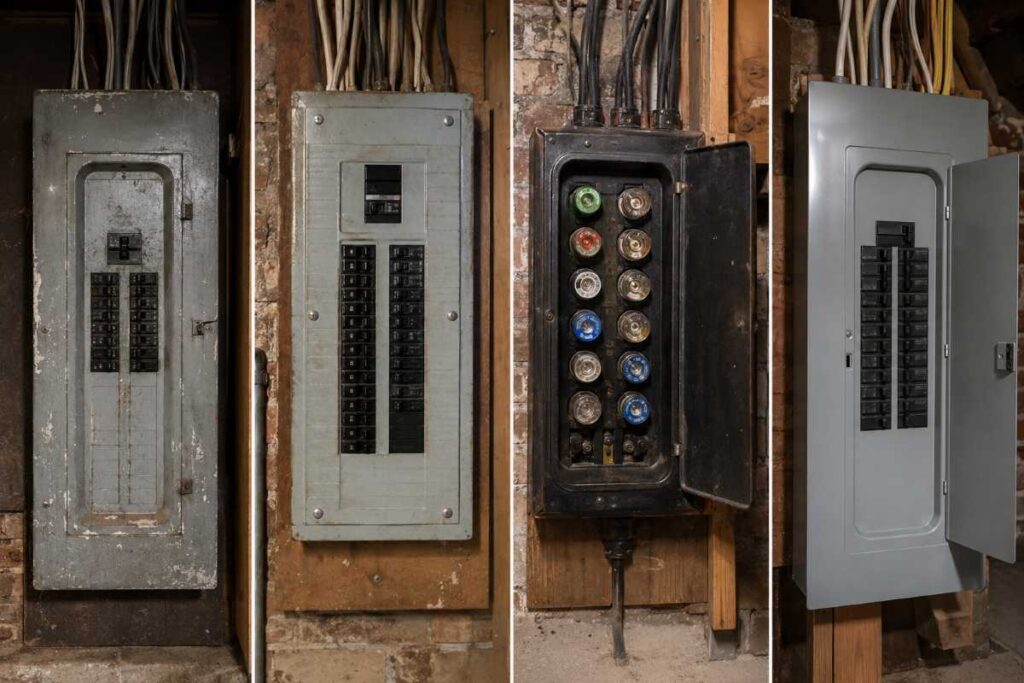
The table below shows what each type is, why it is a hazard, and how it affects insurability.
| Panel type | What it is | Documented hazard | Insurance impact |
|---|---|---|---|
| FPE Stab-Lok | Breaker panels installed roughly 1950s to mid-1980s, marked “Stab-Lok” on the door or breakers | Independent testing has found the breakers fail to trip under overload or short at rates from 25% to over 50%; a breaker that will not trip leaves the circuit energized and the wiring free to overheat. A New Jersey court found FPE had faked the safety tests used to earn its UL listing. The CPSC closed its investigation in 1983 without a recall, citing budget, not a finding that the panels were safe. | Many carriers decline coverage, raise premiums, or require replacement before writing a policy |
| Zinsco / Sylvania | Panels common mid-1950s to 1970s, sold under Zinsco and GTE-Sylvania names | The breakers can overheat and melt onto the aluminum bus bar, so a breaker can read “off” while still passing current and can never trip. Aluminum components corrode and loosen over time. No recall was ever issued. | Frequently blacklisted; carriers deny coverage or demand replacement as a condition of insuring |
| Fuse box | Pre-breaker service using screw-in or cartridge fuses instead of circuit breakers | Not defective by design, but signals a service predating modern breaker panels, usually undersized for today’s loads and prone to overfusing when the wrong fuse is installed | Often triggers non-renewal or a required upgrade, similar to FPE and Zinsco |
| Split-bus panel | Multi-main breaker panels from the 1960s to 1970s with no single main disconnect | With no single main breaker, shutting off all power in an emergency means finding and throwing several breakers at once, and the lower-half breakers commonly sit at or past capacity on a modern load | Can draw scrutiny during inspection and coverage review |
Which Warning Signs Mean Stop Using the Panel Now?
Stop using the panel immediately for any burning smell, visible scorch marks, buzzing, or a hot enclosure. These signal active fire or arc risk. Frequent tripping, two-prong outlets, or an aging panel are lower-urgency signs to schedule an inspection for, not emergencies.
The line between the two tiers is simple: a stop-now sign means energy is already escaping as heat, light, or sound at a fault, while a schedule sign means the panel’s protection is still doing its job. The table sorts every sign from this guide by urgency.
| Sign | Tier | Why |
|---|---|---|
| Burning or fishy smell | Stop now | Plastic is already overheating; an active fire risk |
| Scorch marks or discoloration | Stop now | Proof a connection has arced or burned |
| Buzzing, crackling, or sizzling | Stop now | Current is arcing across a loose connection |
| Panel warm or hot to the touch | Stop now | Dangerous resistance building inside the enclosure |
| Sparks from the panel or an outlet | Stop now | Active arcing; treat as a fire risk |
| Breakers tripping repeatedly | Schedule inspection | Points to overload or a failing breaker, not usually immediate |
| Whole-house flicker or dimming | Schedule inspection | Often a loose connection; urgent only if paired with heat or smell |
| Two-prong ungrounded outlets | Schedule inspection | A grounding and shock concern to correct, not an emergency |
| Panel 25 to 40 years old or a known bad brand | Schedule inspection | Most panels reach the end of their service life in this range; evaluate before it fails |
The reason the top tier is anchored on smell, heat, and arcing is that arcing is what starts most electrical fires. The NFPA reports that arcing accounts for the majority of home electrical fires, outnumbering simple overheating by anywhere from two to seven times. A sign that means arcing is happening now is not a sign to monitor.
What Does “Stop Using the Panel” Actually Mean?
Stopping use means cutting power at the main breaker if you can reach it safely, then keeping the panel closed until a licensed electrician arrives. It does not mean opening the panel to look inside. The single most important boundary for a homeowner is the dead front: the cover stays on, because the energized parts behind it can shock or kill even when individual breakers are off.
If you can safely reach the main breaker, switch it off to cut power to the house, and do not touch anything else in the panel. If reaching the main means standing on a wet floor, touching a panel that is hot or sparking, or opening the cover, do not do it. The order of who to call depends on what you are seeing.
Smoke, flames, or a panel actively sparking is a 911 call first. A damaged service line, a burned meter, or anything involving the utility’s equipment outside the house is a call to Ameren Missouri. A panel fault with no active fire is a licensed electrician. When in doubt between a burning smell and an open flame, treat it as the emergency and call 911.
What Should St. Louis Homeowners Do After Spotting a Warning Sign?
After spotting a warning sign, stop loading the affected circuits and have a licensed Missouri electrical contractor inspect the panel. If a replacement is needed, current code requires safety upgrades that an older panel does not have, so the edition your jurisdiction enforces shapes what the job includes.
The steps below move from what you do tonight to what a code-compliant replacement involves. The order matters: reduce the risk first, then get the diagnosis, then understand the scope.
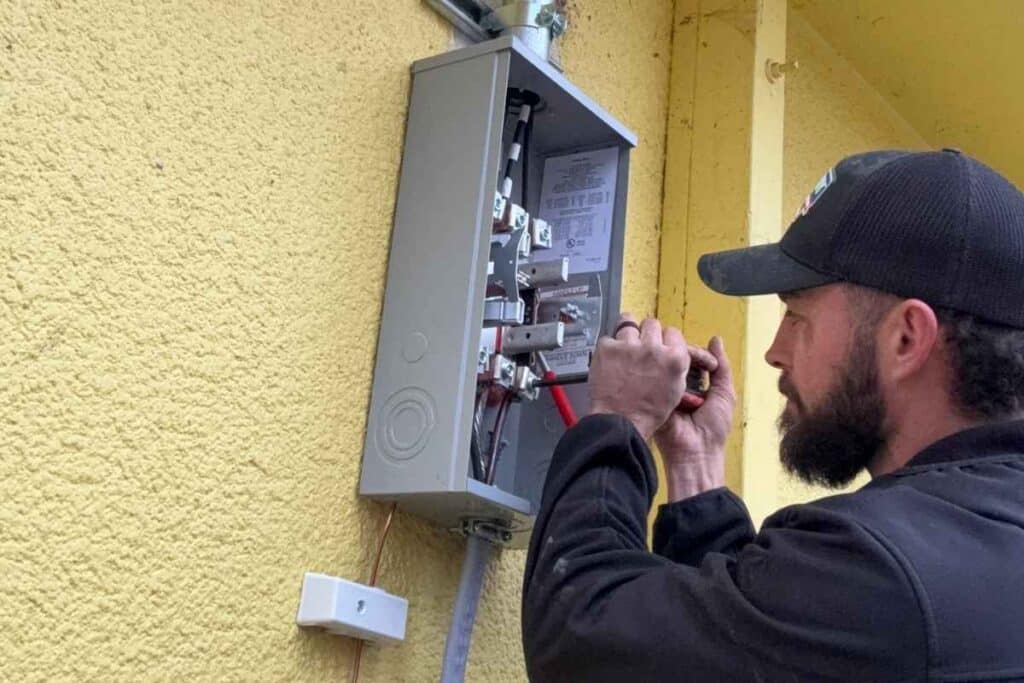
- Reduce the load on the affected circuits. Unplug high-draw devices and stop using the circuit that is tripping, smelling, or warm. This buys time and lowers the immediate risk while you arrange an inspection.
- Book a licensed Missouri electrical contractor. Missouri licenses electrical work at the local level, so confirm the contractor holds a current electrical contractor license for your jurisdiction. The correct credential is Electrical Contractor, not “master electrician,” which in Missouri is a separate registration.
- Have the panel inspected, not just the symptom. A good panel inspection traces the sign back to its cause: a loose termination, a failing breaker, an undersized service, or a defective panel brand. Ask what the electrician found, not only what they recommend.
- Confirm the code edition your jurisdiction enforces. St. Louis-area jurisdictions have been moving to the 2023 NEC on different timelines, and which edition applies changes what a replacement must include. Your building department, or the contractor pulling the permit, confirms the edition in force before the work is scoped.
- Plan for a permit and inspection on any replacement. A service-panel replacement requires an electrical permit and a final inspection. This is not optional paperwork; the inspection is what confirms the new panel is safe and code-compliant.
A replacement done under the 2023 NEC brings the panel up to two safety requirements older panels lack. The code requires a surge protective device on the service when the panel is replaced, protecting the home’s wiring and electronics from voltage spikes, under NEC 230.67. It also requires an emergency disconnect reachable from outside the house, so a firefighter or first responder can cut power without entering, under NEC 230.85. Whether these apply to your job depends on the edition your jurisdiction has adopted, which is why confirming the current code before the work starts protects you from a failed inspection.