
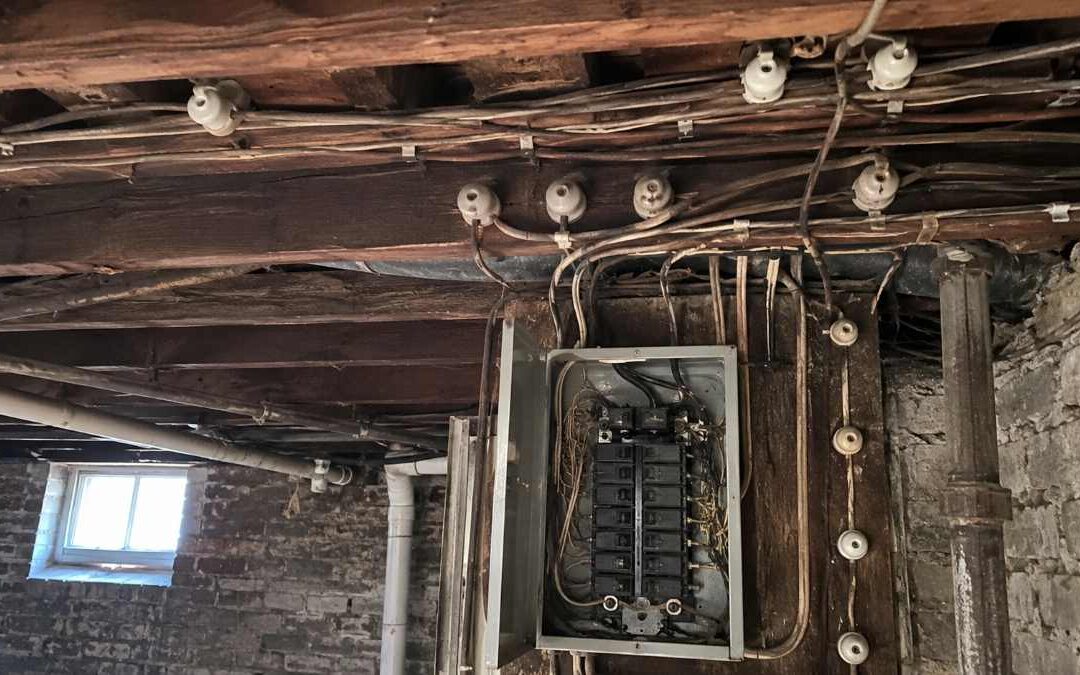
Legacy home electrical wiring hazards are the safety risks carried by outdated residential wiring systems and hazard-brand equipment installed before modern grounding, insulation, and overcurrent standards. In much of the older St. Louis housing stock, that means one of four legacy systems, or a mix of them: knob-and-tube wiring, cloth-insulated wiring, aluminum branch circuits, and ungrounded two-prong circuits. Failure-prone panel brands like Federal Pacific and Zinsco sit alongside them.
The hazard is rarely age by itself. It is a missing ground path, insulation that dries out and cracks, connections that loosen and overheat, and breakers that no longer trip when they should, which is how a fault becomes a fire.
This guide breaks down each legacy system: what it is, how it fails, and how to tell whether your home has it. It covers what insurers flag and what a rewire or panel swap involves. Both are permitted and inspected against the code edition your jurisdiction enforces. Behind a newer panel, the branch wiring is often still original.
What Counts as a Legacy Wiring Hazard in an Older Home?
A legacy wiring hazard is an outdated residential wiring system or a hazard-brand panel that lacks modern grounding, insulation, or overcurrent protection. In older St. Louis homes that means knob-and-tube wiring, cloth-insulated wiring, aluminum branch circuits, ungrounded two-prong outlets, and failure-prone panels like Federal Pacific and Zinsco.
Each system belongs to a rough era, and the rest of this guide takes them one at a time:
- Knob-and-tube wiring, the oldest, running from the 1880s through the 1940s, with no grounding conductor at all.
- Cloth-insulated wiring, roughly the 1920s through the 1960s, where the fabric and rubber insulation is the failure point.
- Aluminum branch circuits, installed mainly between the mid-1960s and mid-1970s during a copper shortage.
- Ungrounded two-prong outlets, standard before the early 1960s, signaling a circuit with no ground path.
- Federal Pacific and Zinsco panels, hazard brands whose breakers can fail to do their one job.
A home rarely holds just one of these. Additions and partial rewires stack eras on top of each other, and the joints between old wire and newer wire are where trouble tends to start. Knowing which systems are present is the first step.
Age by itself is not the hazard. A circuit does not become dangerous on a birthday; it becomes dangerous when a specific part of it fails, and each legacy system fails in its own way.
The four failure modes are consistent across these systems. A missing ground path leaves stray current with nowhere safe to go, so a fault energizes the metal a person touches instead of tripping the circuit. Insulation that dries out and cracks exposes live conductor inside walls and boxes, which is how a short or an arc starts out of sight.
Connections that loosen and oxidize build resistance, and resistance builds heat at the exact point the wire meets a terminal. Overcurrent devices that no longer trip remove the last safeguard, letting an overload run until something scorches. See the failure mode, not the age. The fix stops being guesswork.
Knob-and-Tube Wiring: Why Pre-1940s Systems Are a Fire Risk
Knob-and-tube wiring is an early ungrounded system that carries no equipment ground and becomes a fire risk when it is buried in insulation, overloaded, or spliced unsafely. Under NEC Article 394 it is permitted only to extend an existing installation or by special permission, not for general new wiring.
The system is simple to recognize once you know it. Single insulated copper conductors run through the air, held on ceramic knobs and threaded through ceramic tubes at the framing.
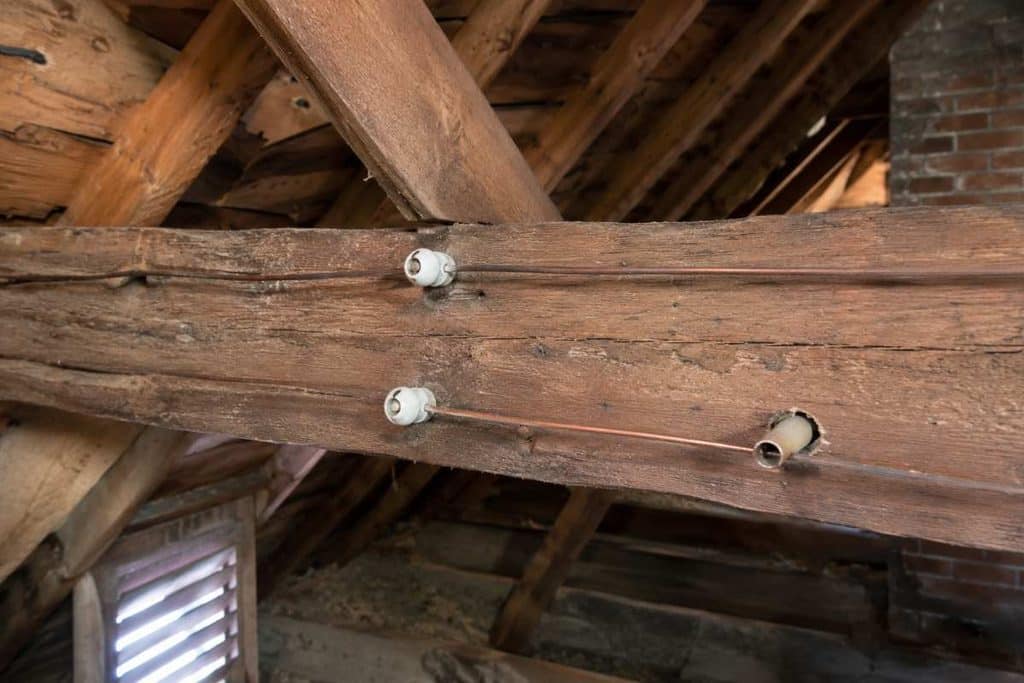
The hot and neutral run separately, spaced apart, with no third wire for ground. It was the standard method from the 1880s into the 1940s, built for a house with a few lights.
Its code status tells you where it stands today. You cannot wire a house with knob-and-tube now, and you cannot rebuild a system in it. Article 394 keeps the method in the code only so an existing run can be extended, or used elsewhere by special permission, which an inspector rarely grants when safer methods exist. The code tolerates what is already there; it does not endorse keeping it.
The danger is not the porcelain. It is what the decades and the modern house have done to the system around it.
Start with the ground. Knob-and-tube has no equipment grounding conductor, so a fault has no safe path back. It can energize a fixture or an appliance case that a person then touches.
Heat is the second problem, and the one that catches owners out. The system was built to shed heat into open air. Blown or batted attic insulation laid over it makes the conductors run hotter than intended, which is why the code bars concealment in insulation that envelops the wire.
The insulation itself is the third failure. Original rubber and cloth dries, hardens, and flakes off the conductor after this many decades, leaving bare wire where heat cycling is worst. Splices are the fourth, and the original soldered joints are rarely the problem; the danger is the later taps twisted onto brittle conductor outside any box. A sound repair replaces the whole run, not one length.
Cloth-Insulated Wiring: Brittle Insulation and Asbestos Concerns
Cloth-insulated wiring from roughly the 1920s to the 1960s fails as its fabric and rubber insulation dries out, cracks, and flakes off the conductor, exposing live wire inside walls and boxes. Some cloth insulation of this era can also contain asbestos, which changes how it must be handled during removal.
The wiring is named for its covering. A rubber layer sat directly on the copper, wrapped in a woven fabric jacket for protection, in the decades before plastic-sheathed cable took over. It replaced open knob-and-tube runs in new construction and, like knob-and-tube, usually carried no ground.
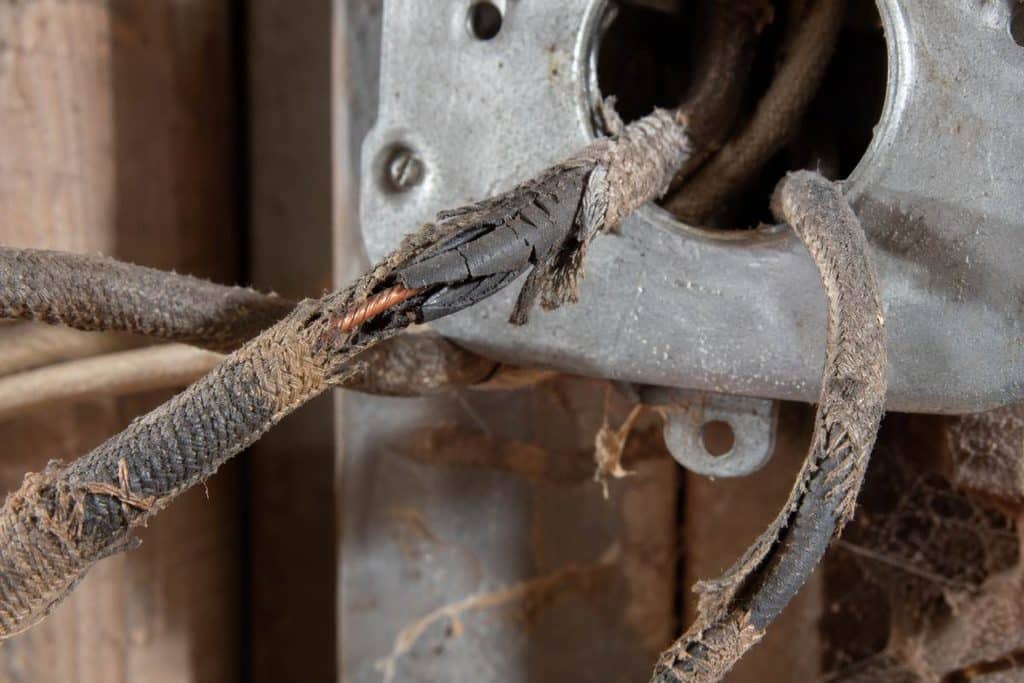
The failure is the insulation, not the copper. Rubber and fabric harden and grow brittle with age and heat, then crack and shed off the conductor.
It goes worst at the boxes and connections, where every switch throw and load cycle heats the joint and speeds the breakdown. What is left is bare conductor sitting in a box or a wall cavity, one contact away from a short or a ground fault.
Asbestos is the second consideration, and it is a maybe, not a given. The black tar-coated cloth that gets flagged as asbestos on sight is usually asphalt-saturated fabric, while the real asbestos hides in spots like old fixture leads. Only a lab test confirms it. That uncertainty is the point: suspect wiring gets tested before it is disturbed, because cutting or pulling asbestos-containing insulation is what puts fibers in the air.
Patching does not fix a system like this. The insulation is failing everywhere at once from the same age and heat, so replacing one bad length leaves the next one to crack a season later. A full rewire is the reliable repair, and it clears the asbestos question at the same time by removing the material under controlled conditions.
Exposed legacy conductor is not a homeowner job. If insulation is cracking or bare wire is showing at a box, that work belongs with a licensed electrician.
Aluminum Branch Wiring: The 1960s-70s Connection Hazard
Aluminum branch wiring installed roughly between 1965 and 1973 fails at its connection points because aluminum expands, oxidizes, and creeps under screw terminals, loosening connections that then overheat. The CPSC found that homes built before 1972 with aluminum wiring are far more likely to have connections reach fire-hazard conditions than copper-wired homes.
The trouble is not the aluminum carrying current down the run. It is what happens where the wire lands on a screw. Aluminum expands and contracts more than copper with every heating and cooling cycle, so a terminal that was tight at install slowly works loose.
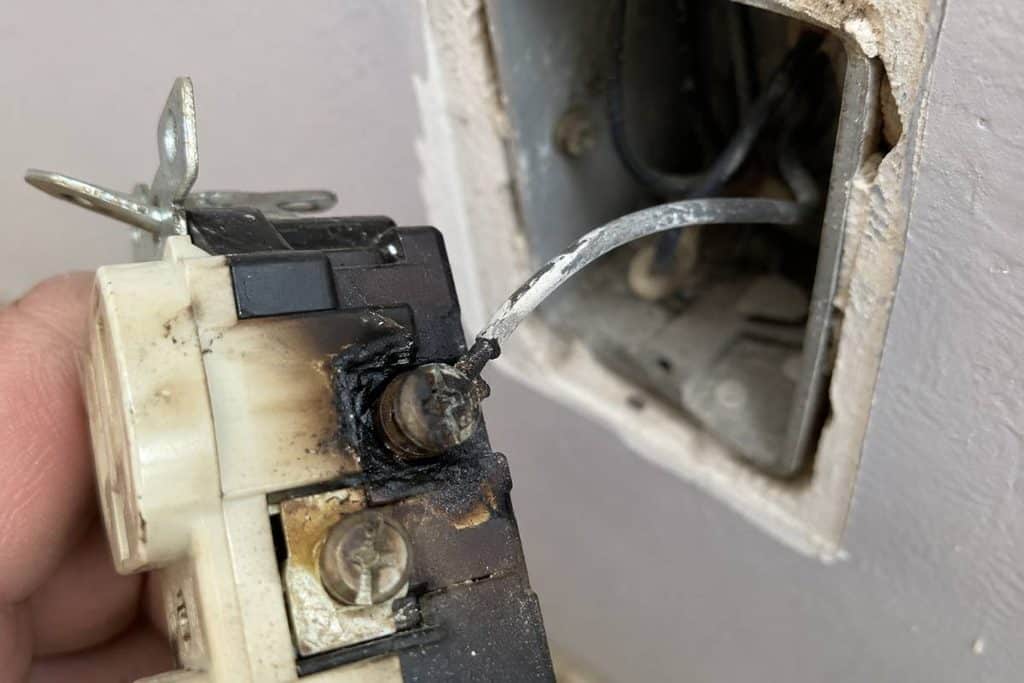
The exposed metal also oxidizes into a thin, poorly conducting film, and that resistance turns the connection into a heat source. A loose, oxidized termination does not fail quietly. It warms, chars the device, and can arc.
The scale of that risk is documented, not estimated. A survey for the CPSC, published in Repairing Aluminum Wiring (Publication 516), found pre-1972 aluminum-wired homes are 55 times more likely to have an outlet connection reach a fire-hazard condition than copper homes.
That condition was defined precisely: a cover-plate screw reaching 149 degrees C, visible sparking, or charring around the receptacle. The survey counted only outlet connections. Switches, junction boxes, and appliance terminations sit outside even that number, which means the real exposure runs wider than the figure.
Two fixes resolve the hazard, and neither is the cheap one. A full copper rewire is permanent, because it removes the aluminum entirely and ends the mechanism instead of managing it.
Where a rewire is impractical, the accepted repair is a connector at every connection. A COPALUM crimp or an AlumiConn bonds a short copper pigtail to the aluminum, so the device sees only copper.
The repair that looks like a bargain is the one to question. Swapping outlets and switches for CO/ALR-rated devices costs less, but it leaves every splice and junction untouched. Safety reviewers treat it as an incomplete measure, not a resolution. Reliable work happens at every connection in the house.
Ungrounded Two-Prong Outlets: What the Missing Ground Means
Two-prong outlets mean the circuit has no equipment grounding conductor, so there is no safe fault path for stray current. The 1962 NEC (Section 210-7, Grounding Receptacles) was the first edition to require a grounding conductor on standard branch circuits, which is why homes wired before the early 1960s often lack a ground throughout.
A ground is the wire that does nothing until something goes wrong. In normal use, current flows out on the hot and back on the neutral, and the equipment grounding conductor just sits there.
When a hot wire touches a metal case or a fault develops, that third wire carries the fault safely back and trips the breaker. Without it, the fault has nowhere to go but through whatever completes the circuit next. That can be a person.
The missing ground also leaves modern electronics exposed. Surge protectors and many sensitive devices rely on a real ground to divert transient voltage, so a surge strip plugged into an ungrounded outlet cannot do the job it promises. This is why the ground matters beyond shock alone. A three-prong outlet is no proof of one; a plug-in tester often reads open ground behind it.
The history explains why a whole house can lack it. Grounding was added to the code in stages through the 1950s for wet and high-risk locations, and the 1962 edition was the first to require a grounding conductor on standard branch circuits. A home built before that met a code that did not call for a ground on general circuits, so the absence is original.
The reliable fix is a rewire that runs an equipment grounding conductor to every outlet. That restores the fault path the circuit was never built with, and it makes a three-prong outlet finally mean what it says.
Where a rewire is staged over time, there is a recognized interim step. It is worth understanding exactly what that step does and does not provide.
A GFCI can protect an ungrounded circuit without adding a ground. It watches the current on the hot and neutral and cuts power the instant they differ, which is what a ground fault looks like. That protects the person even though no grounding conductor exists.
What it does not do is create a ground. An outlet protected this way must be labeled “No Equipment Ground,” because a surge device or anything expecting a real ground still will not have one. GFCI protection is a legitimate stopgap for shock. A rewire is the actual repair.
Federal Pacific and Zinsco Panels: Breakers That May Not Trip
Federal Pacific Stab-Lok and Zinsco panels have a documented history of breakers that fail to trip during an overload or short circuit, which removes the protection a breaker is supposed to provide. Both are insurance-flagged, and replacement, not repair, is the accepted course.
A breaker has one job that matters more than any other. When a circuit draws more current than its wire can safely carry, the breaker is supposed to trip and cut power before the wire overheats, and a breaker that does not trip lets the overload run behind the wall. Both brands fail at that job.
Federal Pacific Stab-Lok breakers can fail to trip under a sustained overload. The concern is documented, not assumed. The CPSC opened an investigation in 1980 and closed it in 1983 without ruling on the breakers’ safety, citing limited budget and inconclusive data. It restated that non-finding years later.
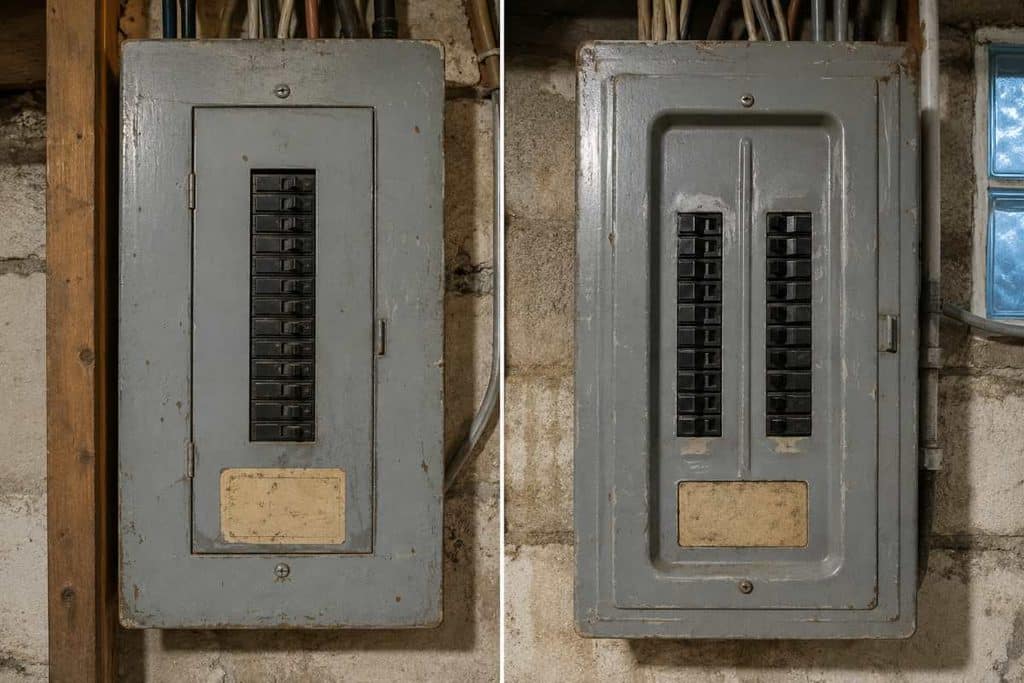
Independent testing filled the gap. Bench tests of Stab-Lok breakers have found roughly half failing to trip when they should, with rates varying by breaker type and age. Replacement is the accepted fix, since the flaw is the design, not a loose part.
Zinsco panels fail a different way. The breakers clip onto an aluminum bus bar, and over years of heating and cooling that connection corrodes and arcs until the breaker welds to the bus. Once fused, it cannot move to trip, even during a real fault.
The dangerous part is what the homeowner sees, which is nothing wrong. The handle still flips to off, so the panel looks normal while the circuit behind a fused breaker stays live.
That is why Zinsco is insurance-flagged and replaced, not repaired. Do not open the cover or test the breakers yourself. Reading the brand off the panel label is as far as a homeowner should go.
How to Tell If Your St. Louis Home Has Legacy Wiring
You can spot legacy wiring by the panel brand and amperage, two-prong outlets throughout, and cloth or ceramic-knob wiring visible in the basement or attic, combined with the home’s build era. Only a licensed inspection confirms what is behind finished walls.
Most of the reliable signs are things you can see from the basement, the attic, and the outlet faces, without tools or removing anything. Start here:
- The panel label reading Federal Pacific, Stab-Lok, or Zinsco, or a 60-amp service, below today’s 100-amp minimum and rarely upgraded on its own.
- A fuse box instead of circuit breakers, which points to wiring from before the 1960s.
- Two-prong outlets through most of the house, meaning circuits with no ground.
- Ceramic knobs and tubes or fabric-wrapped wire visible along the basement joists or in the attic.
- A cover plate that feels warm, or shows scorching or discoloration around the outlet.
- A build date before roughly 1970, which raises the odds of at least one legacy system.
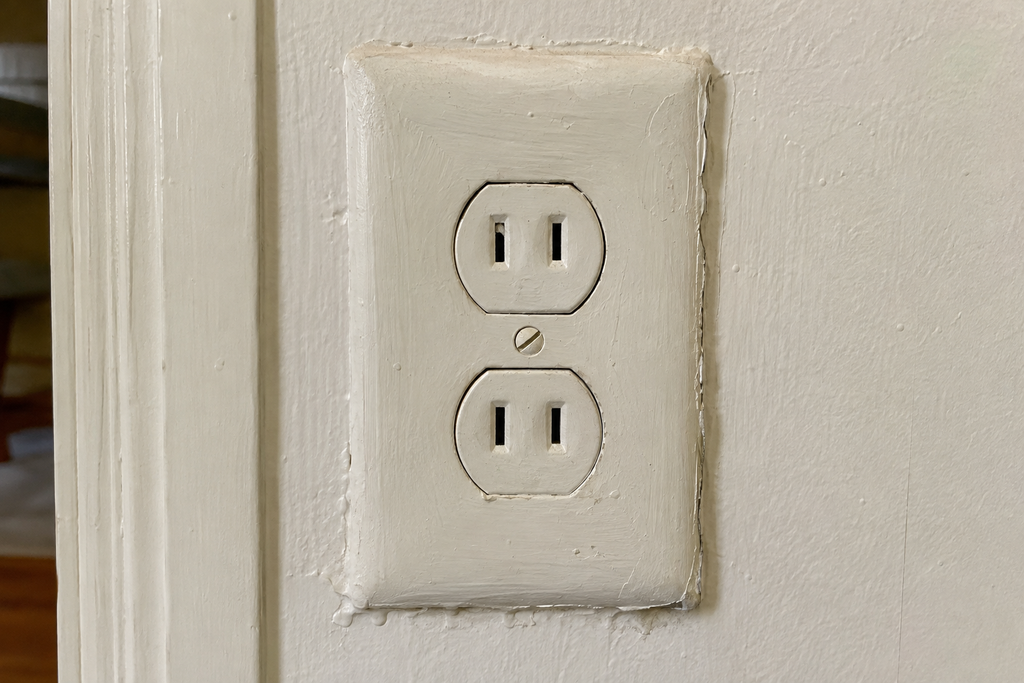
No single sign settles it, but they stack. A pre-1965 house with a fuse box, two-prong outlets, and cloth wire at the joists almost certainly has legacy wiring somewhere in it. And one modern-looking clue does not clear the house, which is the trap the next part covers.
A professional inspection is the step that confirms what you have. St. Louis housing stock has been added onto and partially rewired for decades, so the visible layer often misrepresents the rest.
A panel replaced in the 1990s can still feed original branch wiring no one touched. That is why a switch plate cannot tell the whole story. Hidden splices and a mix of eras in the same house do not show at the outlet face.
A whole-home safety inspection opens the points that matter and traces what runs behind the walls. It is the only way to know what needs work and what does not.
Home Insurance and Legacy Wiring in Missouri
Many carriers flag or decline to renew coverage on homes with knob-and-tube wiring, aluminum branch wiring, or hazard-brand panels, and some require an inspection certificate or completed remediation before they will bind a policy. Documented replacement is what restores insurability.
Insurers treat these systems as elevated fire risk. The ones that draw a flag are the ones this page has already covered: active knob-and-tube, unremediated aluminum branch wiring, and Federal Pacific or Zinsco panels. A home can carry coverage for years and still hit the issue at renewal, once an inspection or aerial review turns one up.
What happens next depends on the carrier. There is no single rule. Some raise the premium, some decline to renew, and some bind only with a wiring exclusion that leaves an electrical loss uncovered. Others write the policy but attach a remediation deadline of a few months.
Appetites differ and change often. The only reliable answer is the one your own carrier gives in writing.
Remediation is what turns the flag off, and documentation is what proves it. Replacing a hazard-brand panel or rewiring a legacy circuit removes the condition the underwriter objected to. The carrier does not take the work on faith.
Keep the paper trail the job generates. That means the pulled permit, the inspection sign-off, and a licensed electrician’s letter describing what was replaced. That package is what an underwriter accepts to reinstate or bind coverage. It is also the set a buyer asks for at resale.
The work protects the house. The paperwork protects the policy and the sale.
St. Louis Electrical Code Requirements for Legacy Wiring Work
When legacy wiring is replaced or a panel is swapped in the St. Louis area, the new work is permitted and inspected against the electrical code edition the home’s jurisdiction currently enforces. Missouri has no statewide electrical code, so the adopted edition varies across St. Louis City, St. Louis County, and St. Charles County municipalities, and the exact applicable edition is confirmed per address before the job.
Replacing legacy wiring is not a like-for-like swap under the code. Old work was legal when it was installed. But once a permit is pulled to replace it, the new work is held to the edition the jurisdiction enforces now, and a rewire or panel change counts as new work.
Which edition that is depends on where the house sits. Missouri operates under home rule, so there is no single statewide electrical code, and St. Louis City, St. Louis County, and the municipalities inside the county adopt editions of the National Electrical Code on timelines that do not line up.
That is why the edition is confirmed per address, not assumed from the metro. A house a few miles from another can answer to a different code year, and the authority having jurisdiction for that address sets the standard the work is inspected to. Confirming the current adopted edition for the specific jurisdiction comes before any panel or wire is specified.
The permit and inspection are what make the work legal and provable, not just complete. A pulled permit puts the job on record with the jurisdiction, and the inspection is the AHJ confirming the finished work meets the adopted code. Without both, a rewire or panel replacement is undocumented, which is the gap that surfaces later at an insurance review or a home sale.
Service work adds a utility step. On an overhead service, Ameren Missouri owns the service drop and the meter, while the homeowner owns the weather head, mast, service entrance conductors, and meter socket down to the panel. A panel or service upgrade means sequencing the Ameren disconnect and reconnect around the permitted, inspected work, so the code side and the utility side move together rather than separately.
Rewire or Retrofit: How to Decide on Legacy Wiring
Full rewire is the permanent fix and the right call for knob-and-tube buried in insulation, widespread cloth-insulation failure, or a hazard-brand panel. Targeted remediation fits contained conditions: approved connectors for aluminum, a grounding retrofit or GFCI protection for specific ungrounded circuits.
The right fix depends on the system and how far the problem spreads, and the table below maps each one to the response that actually resolves it.
| System or condition | Fix that resolves it | Why |
|---|---|---|
| Knob-and-tube, especially buried in insulation | Full rewire | No ground, brittle insulation, and a heat path the system was never built for; patching leaves the rest to fail |
| Cloth-insulated wiring, widespread failure | Full rewire | Insulation is failing everywhere at once, so one replaced length does not solve a system-wide problem |
| Aluminum branch wiring | Copper rewire, or approved connectors at every connection | Rewire removes the aluminum; COPALUM or AlumiConn repairs each connection permanently where a rewire is impractical |
| Ungrounded two-prong circuits | Grounding retrofit or rewire, GFCI as interim | Rewire or a retrofit adds the missing ground; GFCI protects the person but adds no ground, so it is a stopgap |
| Federal Pacific or Zinsco panel | Panel replacement | The breaker or bus-bar failure is the design itself, so replacement is the fix, not repair |
Scope and cost come down to a few honest variables, not a flat number. The biggest is how much of the house is involved. A single ungrounded circuit is contained, while whole-home knob-and-tube is a project measured in walls opened and rooms reached. Access drives it as much as size, since finished plaster and no basement or attic to work from all mean more labor to reach the same wire.
The panel is the other swing factor. If the service or the panel also needs replacing, that is coordinated work with a permit and an inspection, and a service change pulls in the utility step as well. And on a rewire the real surprise is often the wall, not the wire, since reaching it means opening plaster that the electrician does not patch back.
Some conditions are not a judgment call. A hazard-brand panel, knob-and-tube buried in insulation, and failing cloth insulation are replaced on safety grounds, because the failure mode is the system itself and no partial measure removes it. Treat any recommendation to patch one of these as a reason to get a second opinion.
For everything short of that, the decision is yours. Make it with good information. Ask the questions that separate real work from a shortcut. Confirm the contractor is licensed and pulls the permit and inspection instead of skipping both, and that the fix matches the system rather than the cheapest device swap.
Why the Failure Mode Matters More Than the Age
The through-line of every system on this page is that age is not the hazard. A missing ground, degraded insulation, a loose aluminum connection, a breaker that will not trip: each is a specific, identifiable failure, and each has a fix that matches it. An old house is not a dangerous one by default. A house with an unaddressed failure mode is, whether the wiring is a century old or run last decade over an original circuit no one touched.
What the visible layer shows is rarely the whole story. A modern panel can sit over legacy branch wiring, a three-prong outlet can hide a missing ground, and a partial rewire can leave one run feeding a back bedroom. That is why a confirmed condition beats a guess.
Knowing which system is present, and how far it has failed, turns a vague worry about old wiring into a decision you can make. For a closer look at what that confirmation involves, see [what an electrical safety inspection documents].
Codes and Safety Findings Referenced in This Guide
National Electrical Code, Article 394 (Concealed Knob-and-Tube Wiring). Establishes that concealed knob-and-tube is recognized in the code only to extend existing installations or by special permission, and prohibits its concealment in insulation that envelops the conductors (§394.10, §394.12). Informed the knob-and-tube code-status and failure-mode section. Source: NFPA 70, National Electrical Code, published by the National Fire Protection Association (nfpa.org).
National Electrical Code, 1962 edition, Section 210-7 (Grounding Receptacles). The first NEC edition to require that standard branch circuits include or provide a grounding conductor, which is why homes wired before the early 1960s often lack a ground throughout. Informed the ungrounded two-prong section. Source: NFPA 70-1962, Section 210-7, as reproduced in the NFPA 70-1968 reprint (government-hosted copy: https://arlweb.msha.gov/District/DIST_09/Electrical%20test%20materials/ART210.pdf).
U.S. Consumer Product Safety Commission, Repairing Aluminum Wiring (Publication 516). Reports the Franklin Research Institute survey finding that homes built before 1972 with aluminum wiring are 55 times more likely to have one or more wire connections at outlets reach defined “Fire Hazard Conditions” than copper-wired homes, with that condition defined as a cover-plate mounting screw reaching 149°C (300°F), sparks emitted, or charring around the receptacle. The survey addressed outlet connections only. Informed the aluminum branch-wiring section. Source: U.S. Consumer Product Safety Commission, Publication 516: https://www.cpsc.gov/s3fs-public/516.pdf.
U.S. Consumer Product Safety Commission, Federal Pacific Electric investigation. The Commission opened an investigation into FPE Stab-Lok breakers in 1980 and closed it in 1983 without making a determination as to the safety of the breakers, a position it restated in a 2011 revision. The failure-to-trip concern rests on independent and contracted testing rather than a government safety ruling. Informed the hazard-brand panel section. Source: U.S. Consumer Product Safety Commission news release, “Commission Closes Investigation Of FPE Circuit Breakers” (Release 83-008, issued March 3, 1983; revised February 18, 2011): https://cpsc.gov/newsroom/news-releases/1983/commission-closes-investigation-of-fpe-circuit-breakers-and-provides-safety-information-for-consumers.
Missouri electrical code adoption structure. Missouri has no single statewide electrical code; under home rule, cities and counties adopt and enforce editions of the National Electrical Code on independent timelines, so the applicable edition is confirmed per address with the local authority having jurisdiction. Informed the St. Louis code-requirements section. Sources: St. Louis County Department of Public Works electrical-code history (https://stlouiscountymo.gov/st-louis-county-departments/transportation-and-public-works/codes-and-ordinances/electrical-code-history/) and the City of St. Louis ordinance record (https://www.stlouis-mo.gov/government/city-laws/ordinances/ordinance.cfm?ord=70802).
Ameren Missouri service-ownership boundary. On an overhead service, Ameren owns and maintains the service drop and the meter, while the customer owns and maintains the weatherhead, mast, service entrance conductors, grounding electrode system, and meter socket down to the panel. Informed the service-coordination portion of the code section. Source: Ameren Missouri, Specifications for Residential Overhead Electric (https://www.ameren.com/-/media/files/resources-and-support/construction/missouri/electric/specifications-overhead-meter-installations.ashx).