
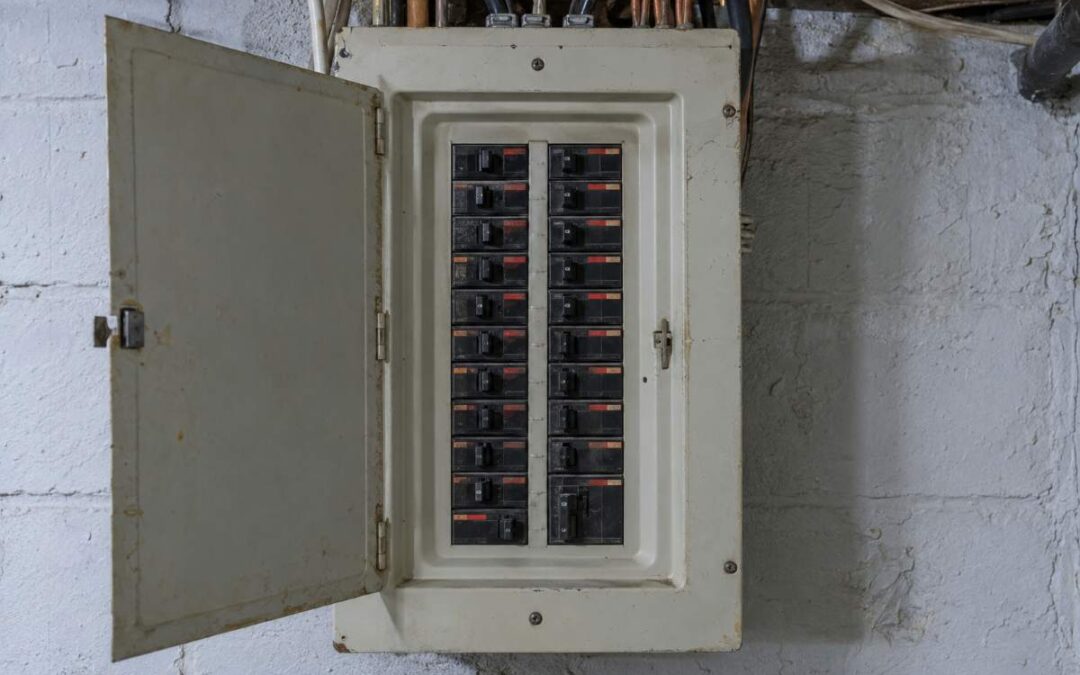
If your home has a Federal Pacific Stab-Lok panel, you are right to check on it. These panels were built by Federal Pacific Electric and installed in millions of homes from the 1950s into the early 1980s. Yours may be one of them.
The concern is specific. A Stab-Lok breaker can fail to trip during an overload, which means the circuit it is supposed to protect keeps drawing current and heating up instead of shutting off. That failure is what ties this brand to electrical fires, and it is why home insurers and inspectors across Greater St. Louis flag these panels in the region’s older housing stock.
Pure Home Electric is a residential electrical contractor serving St. Louis City, St. Louis County, and St. Charles County, MO. This guide explains what these panels are, how to tell if you have one, and what your options are.
What Is a Federal Pacific Stab-Lok Electrical Panel?
A Federal Pacific Stab-Lok panel is a residential breaker panel built by Federal Pacific Electric and named for its Stab-Lok breaker design. It is now widely treated as a hazard brand because its breakers can fail to trip during an overload.
Federal Pacific Electric, known as FPE, manufactured Stab-Lok breakers from 1950 to 1980, and millions of homes across the United States and Canada were built with one. A panel carrying that brand almost always dates to that window.
FPE won that reach on price. It was a cheaper, easier-to-install alternative to the better-known panel makers, so builders used it throughout postwar suburban developments, and it is most commonly found in houses built before 1990. An inspector flags it on sight because the brand dates the whole service to an era of ungrounded outlets and early aluminum wiring.
The Stab-Lok name describes how the breakers connect. Each breaker stabs onto the panel’s bus bar, the metal strip that carries current to every circuit, rather than bolting to it. That stab-in contact is where the connection is made and, in this brand, where problems begin.
Field identification often comes down to matching the breaker’s connector to the bus cutouts, which on FPE panels are shaped like an E or an F. The design worked on paper, but this is now the brand classed as a hazard.
How Do You Know If You Have a Federal Pacific Stab-Lok Panel?
The one sign that confirms a Federal Pacific Stab-Lok panel is the Federal Pacific or FPE name printed on it. The red or orange stripe across the breaker handles is a strong hint, so open the outer door, read the name, and have an electrician verify anything you cannot.
Five things give an FPE Stab-Lok panel away. Any one of them is enough to warrant a closer look.
- Federal Pacific Electric, Federal Pacific, or FPE printed on the panel cover or data plate
- The word Stab-Lok on the panel front or inside the door, though not every FPE panel carries it
- A thin red or orange stripe across each breaker handle
- Breaker toggles that look noticeably narrower than those in a modern panel
- E or F shaped bus cutouts behind the cover, visible once an electrician removes the deadfront
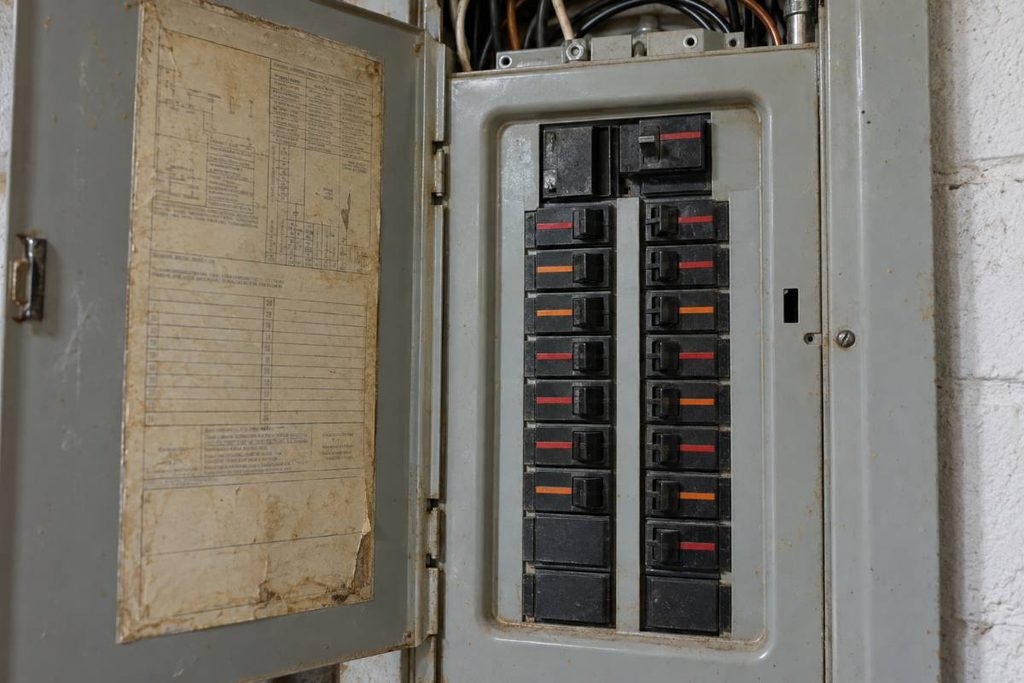
None of these markers is fully reliable on its own. Replacement breakers can carry different stripes, and a repainted cabinet can hide the plate, which is why our technicians treat a visual match as a starting point, not a verdict. If the name reads Federal Pacific, treat it as one until an electrician proves otherwise.
Why Are Federal Pacific Stab-Lok Panels a Fire Hazard?
Federal Pacific Stab-Lok panels are a fire hazard because their breakers can fail to trip during an overload or short circuit, letting circuits overheat instead of shutting off. Breakers that jam in the on position and overheating inside the panel bus add to the risk.
A breaker exists to do one thing: cut power when a circuit draws more current than its wire can safely carry. That is the whole job. When too much current flows, the breaker is supposed to trip open and stop it.
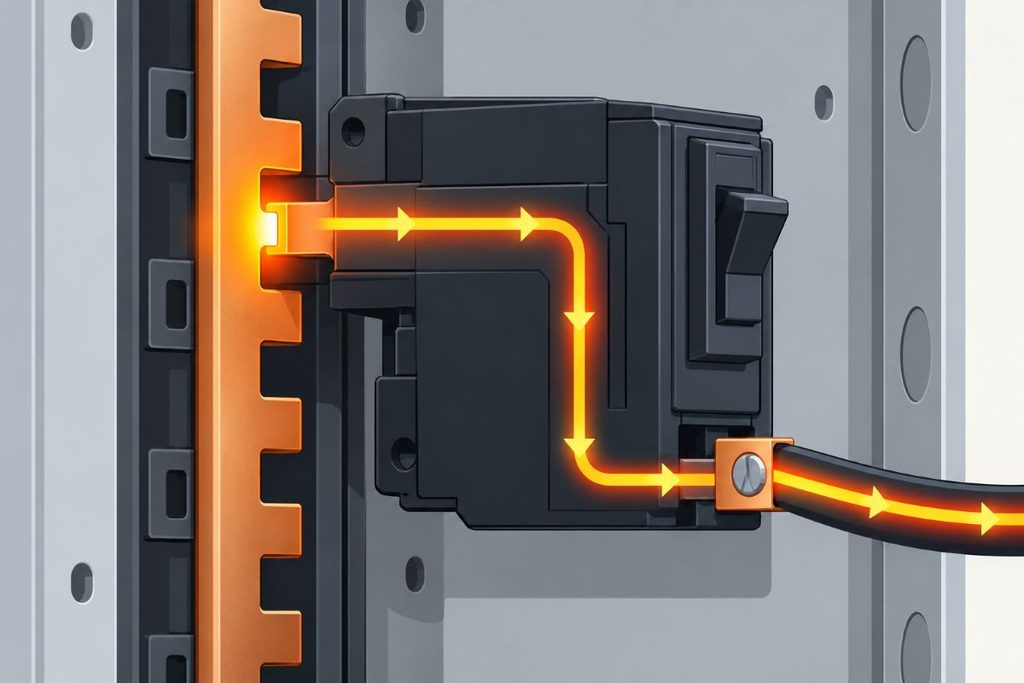
Failure to trip means the breaker stays closed when it should open. The wire keeps carrying current it cannot handle, so the conductor heats up, and the heat builds until the insulation chars and can ignite the surrounding wall cavity. That is the defect. It is why a Stab-Lok panel can look fine and still be dangerous.
Two secondary failures compound the first. Some Stab-Lok breakers jam in the on position, and overheating has been found within the panel internal bus connections. A jam is the worse of the two, because it strips away the manual shutoff a homeowner or electrician would reach for during an active fault.
Independent testing and the insurer record agree that the breakers do not trip to the calibration standard set by Underwriters Laboratories, the body whose listing marks equipment as meeting a tested safety standard. A breaker that fails that standard is not doing its job.
What Did Testing and the Courts Find About Stab-Lok Breakers?
The danger is documented, not reputation. Independent bench testing found that many Stab-Lok breakers failed to trip under overload, and a New Jersey court found Federal Pacific Electric had cheated on the tests it used to win safety approval.
Independent bench testing is the technical basis for the hazard classification. When the engineer J. Aronstein loaded field-sampled Stab-Lok breakers to the current level at which they are supposed to trip, many simply stayed closed.
The failure rate depended on the breaker type. In Aronstein field-sample testing, 14% of the single-pole units failed to trip, and 48% of the two-pole units failed. A breaker that fails at those rates is not a rare defect. It is a design that does not reliably do its job.
The courts reached the same place from a different direction. A New Jersey class action found Federal Pacific Electric had violated the New Jersey Consumer Fraud Act, the state law against deceptive business practices. The company had cheated during breaker testing to obtain the UL approval it needed to sell them.
That finding matters because it goes to the label, not just the lab. Breakers reached homes marked as meeting the safety standard when they did not, per the Superior Court of New Jersey, Law Division, Middlesex County. The tested defect and the court record point the same way.
Was There Ever a Recall on Federal Pacific Panels?
No. The Consumer Product Safety Commission, the federal agency that regulates product hazards, closed its two-year investigation into Federal Pacific Stab-Lok breakers in 1983 without ordering a recall. A closed investigation is not a finding that the panels are safe.
What the Commission actually said is narrower than no recall suggests. Its testing confirmed that the breakers fail certain UL calibration test requirements, the very failures the hazard rests on.
The reason was evidence and money. The Commission said the data available to it did not establish that the breakers pose a serious risk, and that it was unable at the time to link those failures to a hazardous situation. Deciding for certain would have cost more than its entire annual budget, then about 34 million dollars. So it closed the file.
So the record is precise. The Commission closed the matter without making a determination as to the safety of the breakers. No recall was issued, and safety was never affirmatively established, which is why no recall does not mean no hazard.
Do Federal Pacific Panels Affect St. Louis Insurance and Home Sales?
Insurers and home inspectors are the two forces that usually push a St. Louis homeowner to act on a Federal Pacific panel. Many carriers flag these panels and may require replacement to write or keep a policy, and inspectors routinely call them out during a sale.
On the insurance side, the panel is treated as a fire risk, not a paperwork detail. Many carriers will not write a policy on a home with a Federal Pacific Stab-Lok panel, and coverage that is available is often limited or costs more.
Some homeowners learn this the hard way. A policy gets issued, then a cancellation notice follows once the panel is identified, and coverage returns only after the panel is replaced. The insurer-recommended fix is to replace the panel and breakers with a completely new installation.
On the sale side, a flagged Federal Pacific panel surfaces during the buyer inspection and turns into a negotiation item. Buyers and their lenders increasingly expect it replaced before closing. In an old-housing market like St. Louis, the insurer and the buyer often demand the same fix at once, so waiting means getting squeezed from both sides.
The fix is not a seller patch. It is work for a licensed electrical contractor, and handled early it is a scheduled upgrade rather than leverage in the buyer hands at closing.
Why Are Federal Pacific Stab-Lok Panels Replaced Instead of Repaired?
Federal Pacific Stab-Lok panels are replaced, not repaired. The defect is built into the breaker-and-bus design, so swapping individual breakers does not fix it. A proper replacement installs a new panel and breakers and brings the service equipment up to the code edition the local jurisdiction has adopted.
You cannot repair your way out of this panel. The failure lives in how the Stab-Lok breaker seats onto the bus, so the defect is in the connection itself, not in one bad breaker.
Swapping breakers does not solve it. Replacement units, including relabeled or aftermarket breakers, do not reliably restore proper tripping, and a partial fix leaves the same defect in the panel. That is why insurers and electricians specify a full replacement rather than a repair.
A proper replacement is a new panel and new breakers, plus the code upgrades that come with replacing service equipment. What those upgrades include depends on which edition of the National Electrical Code your jurisdiction has adopted.
Surge protection is the clearest example. Where the 2020 or later NEC is in force, a replaced service must add a whole-home surge protective device, a unit that clamps voltage spikes before they reach your circuits, under Section 230.67.
Local adoption decides whether it applies. The City of St. Louis is currently on the 2017 NEC, under which that requirement does not apply, so confirm the St. Louis County edition for your address before the job is scoped.
What Should St. Louis Homeowners Do About a Federal Pacific Panel?
If you have a confirmed Federal Pacific Stab-Lok panel, have it evaluated by a licensed electrical contractor and plan for replacement, not repair. In Greater St. Louis, that job runs through a permit, coordination with Ameren Missouri for the meter, and a final inspection.
The path from suspicion to a safe panel is short and worth doing in order.
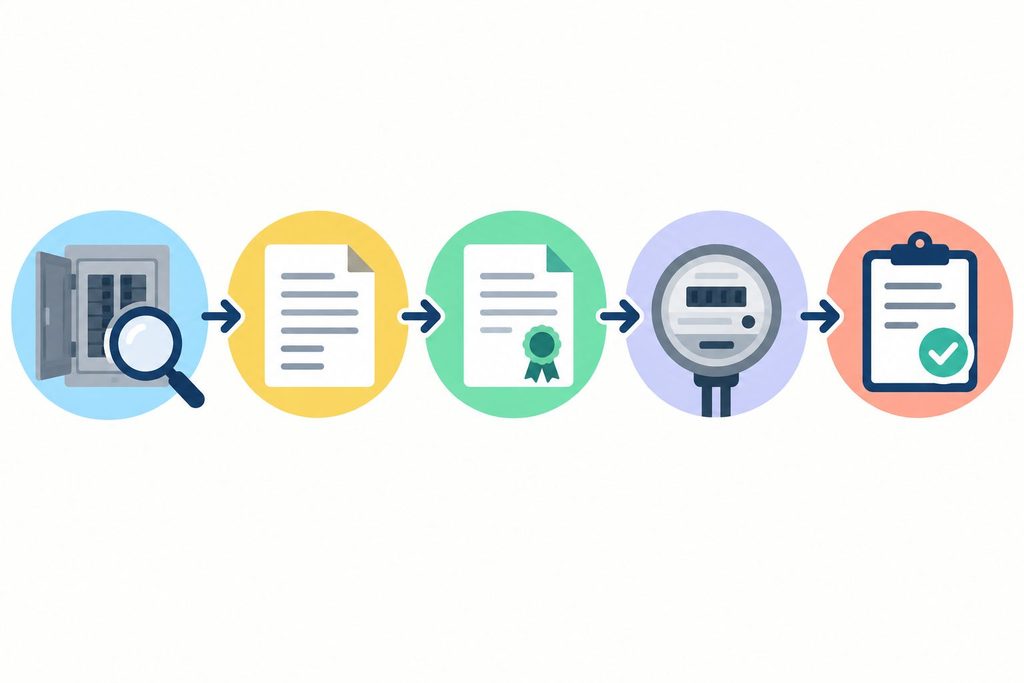
- Confirm the panel with a licensed electrical contractor, since visual signs alone are not proof
- Get a written assessment and a quote for full panel and breaker replacement
- The contractor pulls the electrical permit for the work in-house
- The contractor coordinates with Ameren Missouri to disconnect, set, and reconnect the meter
- The authority having jurisdiction, the local office that enforces the electrical code, inspects the finished work
One rule holds throughout: service-equipment work is not a DIY project. Pulling a meter or opening a service involves live utility power, so a licensed electrical contractor carries the permit, the Ameren coordination, and the liability. Confirm the panel, then let a professional take it from there.