
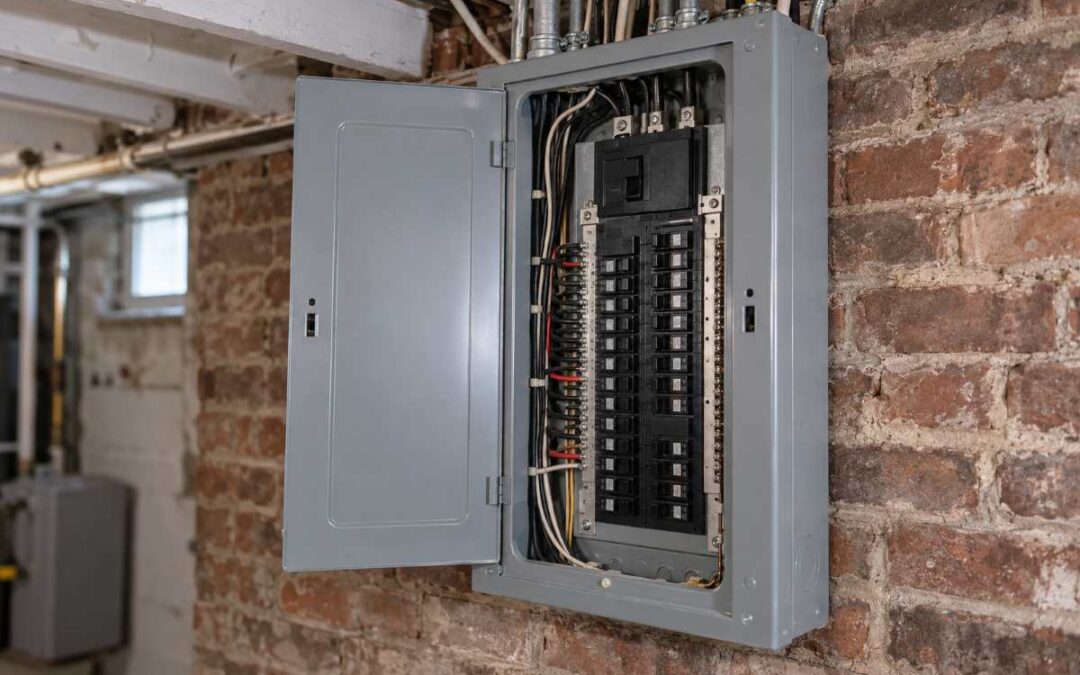
Your electrical service panel is the steel box where Ameren’s power lands and divides into the branch circuits feeding every room, each protected by its own breaker. Repair or replacement turns on where the fault sits: in the panel itself, or in a circuit it feeds.
A sound panel with one isolated fault, a tripped breaker or a loose lug, is a repair. A hazard-brand, undersized, or corroded panel is a replacement. Federal Pacific and Zinsco panels are replaced rather than repaired because their breakers can fail to trip under a fault. About three-quarters of St. Louis City homes predate 1960, so those replacement conditions turn up often here.
A replacement pulls in work a repair does not. The job needs a permit, an Ameren Missouri disconnect and reconnect, and a county inspection. A service replacement in St. Charles County, on the 2020 edition, must add a surge protective device and emergency disconnect that St. Louis City and County do not.
Pure Home Electric does the repair or the replacement, pulls the permit, and coordinates Ameren across all three counties. Which path a given panel needs turns on its age, its condition, and its capacity against the load.
Repair or replace your electrical panel? The factors that decide it
Repair a panel when the fault is isolated and the panel is modern, correctly sized, and undamaged: a single bad breaker, a loose lug, or minor moisture. Replace or upgrade when the panel is undersized, corroded, obsolete, a recognized hazard brand, or failing repeatedly. In St. Louis’s older housing stock, panels more often cross the age, condition, and hazard-brand thresholds, so these six factors settle which way a given panel goes.
| Factor | Leans toward repair | Leans toward replace or upgrade |
|---|---|---|
| Age | Panel is modern and recently installed | Obsolete or discontinued design |
| Condition | Enclosure, bus bar, and breakers intact, with minor surface moisture at most | Corroded bus bar, scorching, or physical damage |
| Capacity vs load | Current amperage covers the load | Undersized for the load, such as 100A under modern demand |
| Fault isolation | One isolated fault, a single tripping circuit breaker or a loose lug | Repeated faults, or the main breaker or bus bar is the failure |
| Hazard-brand status | Not a recognized hazard brand | Federal Pacific Stab-Lok or Zinsco |
| Planned additions | No new high-draw circuits | Adding an EV charger or HVAC that exceeds capacity |
When repairing your electrical panel is the right call
Panel repair is the right call when a sound, correctly sized panel has one isolated, sourceable fault, and the enclosure, bus, and breakers are otherwise intact. The fault has to trace to a known cause, not a sign that the panel itself is failing.
Each repairable fault sits at a single point you can find and fix, rather than across the whole panel. About three-quarters of St. Louis City homes predate 1960, so fewer here pass that intact test.
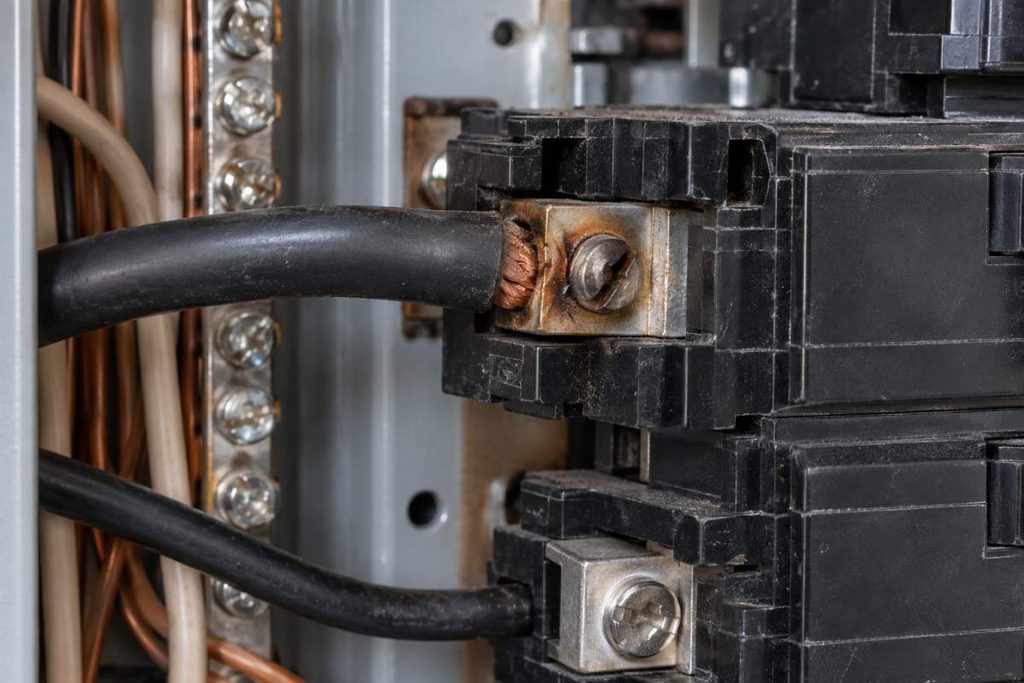
- A single tripping breaker traced to one faulty breaker, corrected with a single-pole breaker replacement.
- A loose lug retorqued to specification once the source of the heat is confirmed.
- A corroded connection cleaned and remade after the moisture that caused it is found and stopped.
- Missing or incorrect panel labeling corrected so every breaker maps to its circuit.
- A meter-base seal repair, the low-cost fix that restores the seal without a full meter-base replacement.
The common thread is containment. The fault stays at one identifiable point, its cause is known, and the rest of the panel still does its job. Fix that one point and the panel is sound again. When the cause cannot be isolated, or the enclosure, bus, or breakers are compromised, the job has moved past repair.
When replacing is the only safe option
Replacement is the only safe option when the fault is built into the panel itself or into wiring a new panel cannot fix. The hazard is in the equipment or the wiring, not in a single part you can swap.
These cases cluster in St. Louis’s older housing stock, where a panel cannot be made right by fixing one thing.
- Federal Pacific Stab-Lok panels, whose breakers can fail to trip under a fault.
- Zinsco panels, whose breakers can fuse to the bus bar and stop tripping.
- An undersized 60A or 100A service that cannot carry the home’s current load.
- A physically damaged panel with a burned bus bar, cracked enclosure, or water intrusion.
- A home on aluminum branch-circuit wiring, where the hazard sits in the wiring, not the panel.
- A home still on knob-and-tube or ungrounded two-prong circuits, which a new panel does not resolve.
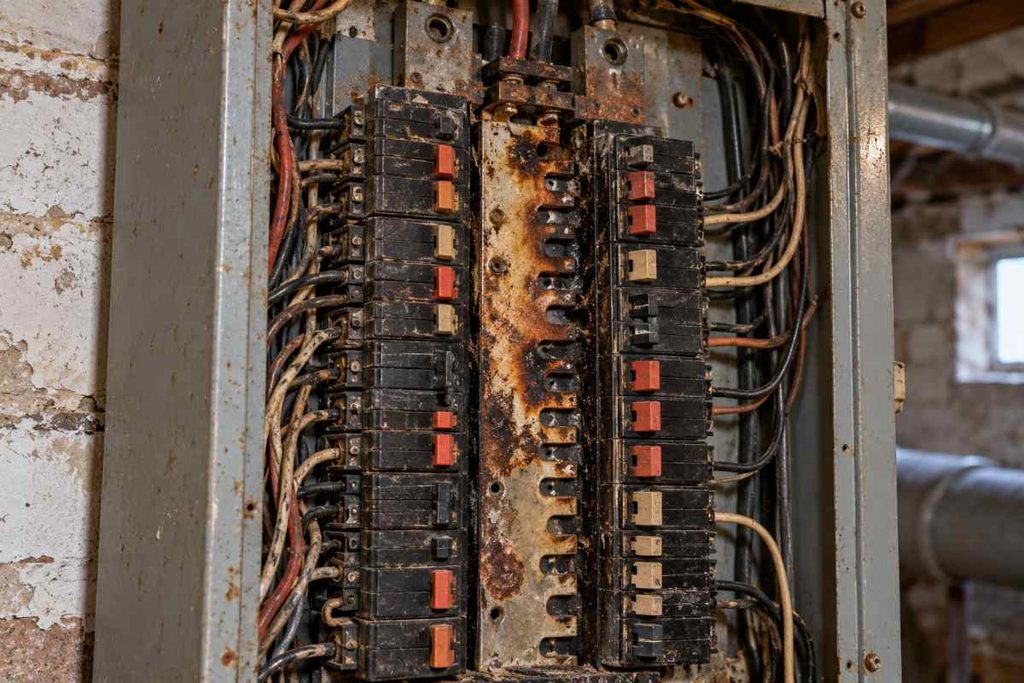
Hazard-brand and failed panels are replaced, not repaired, because the defect is the equipment itself. The hazard brands are insurance-flagged, and no new breaker fixes a bus or a design that lets faults through.
With aluminum branch-circuit wiring, the hazard lives at the outlet and switch connections, so a new panel changes nothing. Homes built before 1972 and wired with aluminum are 55 times more likely to have connections at outlets reach fire-hazard conditions than copper-wired homes, the U.S. Consumer Product Safety Commission found. The wiring is the fix, not the panel.
A panel upgrade offered as the fix for a knob-and-tube or aluminum-wired home is a red flag, because the hazard sits upstream of the panel.
Panel replacement vs full service upgrade: what’s replaced
A panel replacement stops at the box; a full service upgrade rebuilds the service entrance and raises the home’s amperage. The utility’s responsibility ends at a clear line: you own everything from the weatherhead down, including the meter base, while Ameren Missouri owns the meter and the service drop.
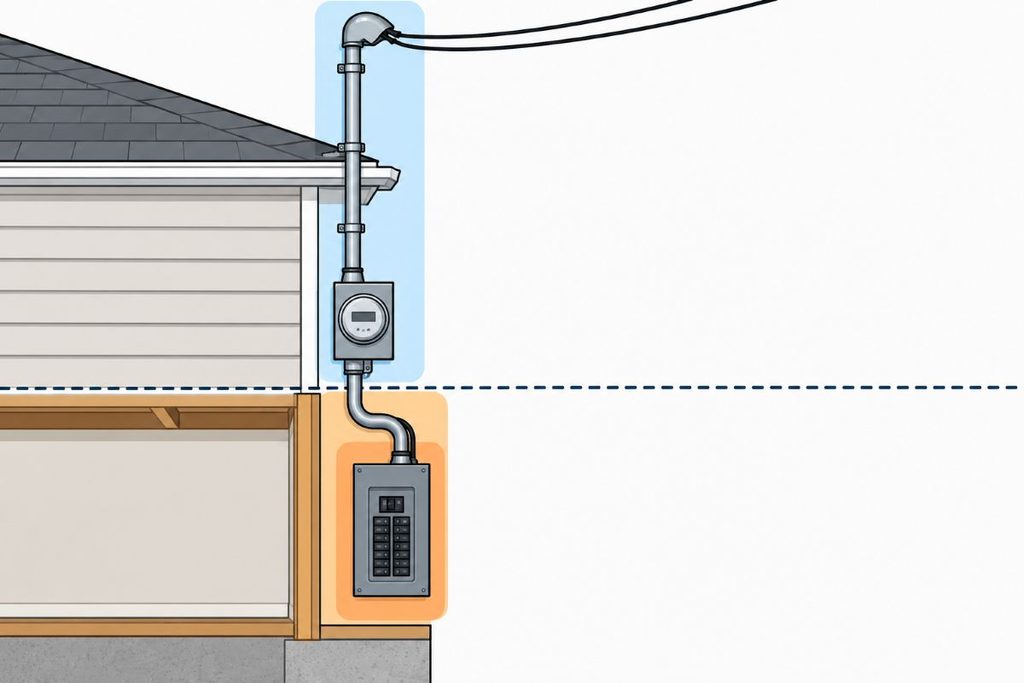
The difference is which parts each job replaces.
| Component | Panel replacement | Full service upgrade |
|---|---|---|
| Panel enclosure, bus, and breakers | Replaced | Replaced |
| Meter base and socket | Left in place | Replaced |
| Mast, weatherhead, and service-entrance cable | Left in place | Replaced |
| Service amperage | Unchanged | Raised, such as 100A to 200A |
| Service drop (Ameren-owned) | Stays on the existing service entrance | Reconnected to the new service entrance |
Why a replacement can trigger code a repair does not
Repairing a panel in place triggers no new code. Replacing the service equipment can, but in your area that pulls in exactly one new requirement, and only in one county. St. Charles County, on the 2020 NEC, requires a Type 1 or Type 2 surge protective device on the service whenever the service equipment is replaced (NEC 230.67).
That surge device is the cost driver, not an upsell.
St. Louis City is on the 2017 NEC and St. Louis County on the 2014, both of which predate the rule, so a replacement there does not trigger it. The exterior emergency disconnect (NEC 230.85) applies in none of the three: St. Charles deleted it by local amendment, and the 2017 and 2014 editions never had it.
What panel repair and replacement cost in St. Louis
Cost should follow the diagnosis: the cheapest fix is right only when the panel is otherwise sound. The number moves with the new amperage, the meter base and service-entrance scope, the wiring condition at the panel, and your municipality’s permit and inspection fees.
Pure Home Electric publishes these ranges and gives a written estimate before any work, with no surprise charges.
| Scope | Typical cost in St. Louis |
|---|---|
| Meter-base seal repair | Around $200 |
| Panel or 100A-to-200A service upgrade | $1,141 to $1,902, about $1,522 on average |
| A replacement in St. Charles County | Plus a surge protective device the 2020 NEC requires (NEC 230.67) |
Permits, Ameren coordination, and inspection: how a St. Louis panel job runs
A panel or service replacement in St. Louis runs in a fixed order: permit, Ameren disconnect, the work, inspection, then reconnect. Pure Home Electric handles the permit, the utility, and the inspection in-house, so the homeowner never manages the jurisdiction.
Each step has a clear owner.
- A licensed electrical contractor pulls the electrical permit before any work begins.
- Ameren Missouri disconnects the service and pulls the meter so the panel can be worked de-energized.
- The old panel or service equipment comes out and the new equipment goes in.
- The authority having jurisdiction (AHJ) inspects the finished work.
- Ameren reconnects the service and resets the meter, and power is restored.
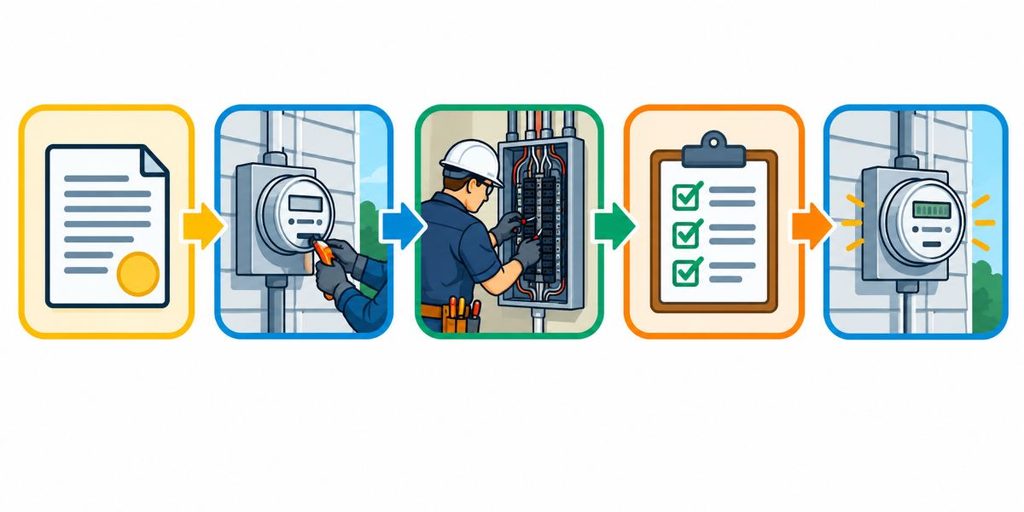
The permit, the two Ameren visits, and the inspection are jurisdiction and utility work, not electrical work. Left to the homeowner, that is four touchpoints across two agencies, and any gap between them is time without power. Pure Home Electric runs all four.
Most jobs finish within a day, and Ameren usually reconnects within a couple of hours of the call.
How to decide what your panel needs before you call an electrician
Before you call, write down what the electrician will need, and know the signs that mean stop now. A burning smell, buzzing, scorch marks, or a panel hot to the touch is an emergency: stop using it and call right away.
In St. Louis, panels often sit in damp basements, so corrosion shows up sooner here. Here is what to record so a first visit is faster and more accurate:
- The amperage on the main breaker and the brand on the panel label.
- Which breaker trips, and what was running in the house when it tripped.
- Any rust, corrosion, or water staining in or around the box, with a photo.
- Whether it is a fuse panel or a breaker panel, and roughly how old it is.
The tripping pattern tells you how worried to be. A breaker that trips only when the AC, microwave, and dryer run together is usually a simple overload. One that trips with almost nothing running, or will not reset, points to a fault. Do not keep resetting a fault.
Those emergency signs point to active heat or arcing inside the panel, so the move is to stop, not to investigate. Do not open the panel cover; the interior stays energized even with the main breaker off, and that makes it licensed-electrician work. Pure Home Electric runs 24/7 emergency response for exactly these conditions.