
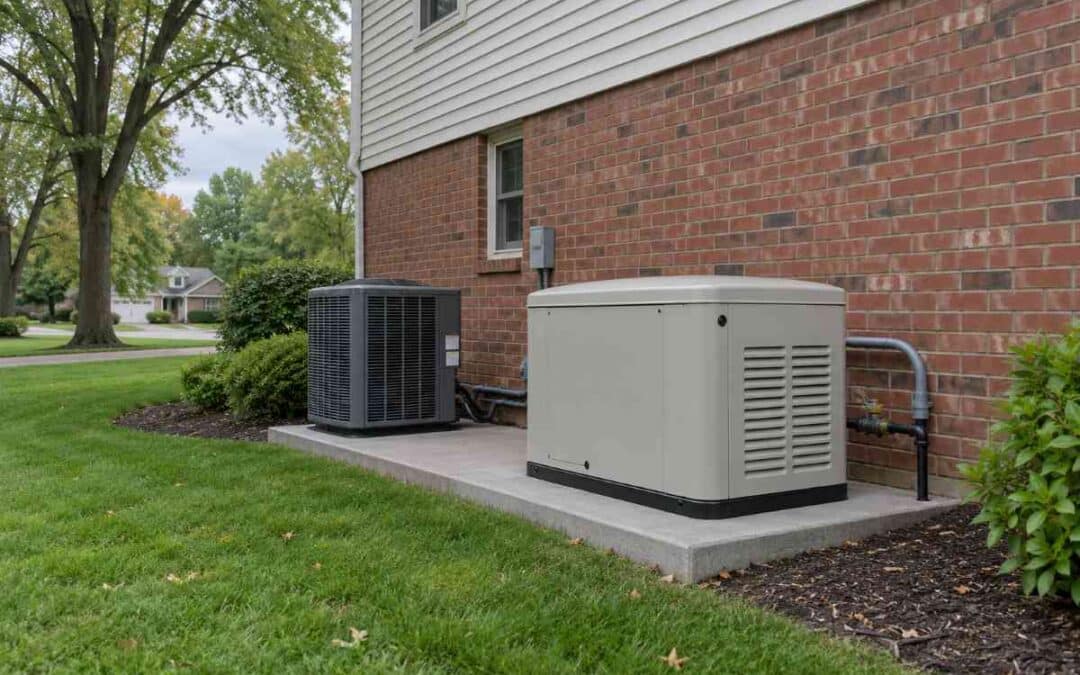
Home standby generator kilowatt sizing means matching a generator’s output, in kilowatts, to the load your house must run in an outage. Most St. Louis homes land in one of three ranges. Which large 240 volt loads must run sets the tier, not square footage.
Essential circuits take 10 to 16 kW. A whole home with one central air conditioner takes 16 to 22 kW, and an all electric home, multiple HVAC systems, or an EV charger pushes into 22 to 48 kW and up.
Two numbers drive the size. Running watts are the steady draw of everything on at once. Starting watts are the surge a motor pulls when it kicks on, which is why the generator must be rated above their sum. Fuel cuts it too: a unit makes less on natural gas than propane, and summer heat drops output right as the AC drives load up.
Local service sets the rest. Ameren Missouri is the electric utility across St. Louis City, St. Louis County, and St. Charles County, and Spire supplies the natural gas most standby units here burn.
The calculation runs under NEC Article 702, which governs optional standby systems. Benjamin Marchiony, a Missouri licensed Electrical Contractor, reviewed it.
What Size Standby Generator Does a St. Louis Home Need?
Most St. Louis homes fall into one of three standby generator tiers: 10 to 16 kW for essential circuits, 16 to 22 kW for the whole home with one central air conditioner, and 22 to 48 kW or more for homes with electric heat, multiple HVAC systems, or an EV charger. Which large 240 volt loads must run during an outage sets the tier, not square footage.
The table below shows what each tier carries and what it leaves off, so a home can be matched by its actual loads.
| Tier | kW Range | Loads Covered | Loads Excluded | Typical Home Profile |
|---|---|---|---|---|
| Essential | 10 to 16 kW | Refrigerator, freezer, sump pump, furnace blower, lighting, select outlets, well pump if present | Central AC compressor, electric range, electric dryer, electric tank water heater | Gas furnace and gas water heater, running core circuits only |
| Whole home | 16 to 22 kW | Everything in the essential tier plus one central air conditioner | Second AC system, electric heat strips, EV charger | 200A service, gas furnace, gas water heater, one central AC |
| High demand | 22 to 48 kW and up | Multiple HVAC zones, heat pump auxiliary heat, all electric appliances, EV charger, pool equipment | Sized to carry these together; load management may still cap them | All electric home, or multiple air conditioners, or an EV charger |
Two things decide which tier a home lands in. The first is appliance fuel. A gas furnace, water heater, and range keep the heaviest loads off the generator, which holds the home out of the high demand tier.
The second is whether central air has to run during the outage. Square footage is a weak proxy. Published sizing charts disagree on the bands, so a 2,000 square foot all electric home and a 2,000 square foot gas home can need different generators.
Outages here land in the season when that second question matters most. Storms during the July 2006 heat wave left about 646,111 AmerenUE Missouri customers without power, a figure from the Missouri Public Service Commission Staff Final Report in Case No. EO-2008-0218.
That scale still recurs. Ameren Missouri restored about 208,000 customers after the May 2025 storm, so whether the AC must keep running stays the biggest tier decision in this market.
What Is the Difference Between Running and Starting Watts?
Running watts are the continuous power an appliance draws once it is operating. Starting watts are the brief surge a motor pulls at startup, and that surge is why a generator must be larger than the simple sum of its loads.
Size for total running watts plus the largest motor’s surge above its own running draw. That motor is usually the central AC compressor. A 16 kW generator runs a 3 ton air conditioner only when its motor starting capability covers that compressor’s surge, or a soft starter brings the surge under it.
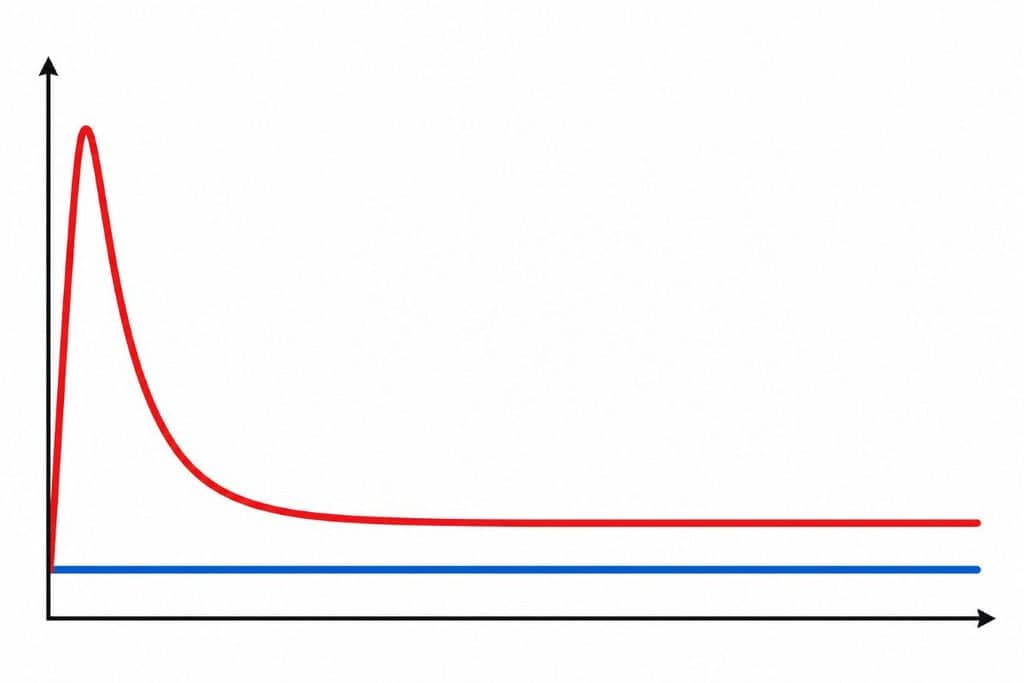
Read both numbers off the nameplate. Running watts equal rated volts times rated amps, divided by 1,000 for kilowatts.
A motor’s starting draw is different. It is the locked rotor amps, printed as LRA on the compressor nameplate, which is the current the motor pulls in the instant before it spins. The running figure beside it is the RLA, the rated load amps the compressor draws once it is turning.
Resistive loads skip the surge entirely. A range element or water heater adds to running watts but never spikes at startup, because only motors do.
One spec line trips people up. Single phase home standby units are rated at a 1.0 power factor, so their kW and kVA figures match. The Kohler 20RCA lists 18 kW and 18 kVA on natural gas, and the Generac 7042 is rated at 1.0 as well.
kVA and kW split only when the power factor drops below 1.0. Check that line before you trust a kVA number.
The AC compressor usually sets the surge. Read the condenser’s LRA and convert it to starting kVA: multiply LRA by 240 volts, then divide by 1,000. Compare it to the generator spec sheet’s motor starting capability.
As an example, the Kohler 20RCA lists a motor starting capability of 41 kVA at a 35 percent voltage dip. If the compressor’s starting kVA sits under that, the unit holds voltage through the start. Tonnage alone will not tell you. A 3 ton compressor from one brand can draw a different LRA than a 3 ton from another.
A soft starter changes the math. It is a module an installer wires into the compressor to ramp the motor up instead of letting it slam on. Micro-Air states its EasyStart delivers a 65 to 75 percent start current reduction against the compressor’s LRA.
That drop can keep a one air conditioner home inside the 16 to 22 kW tier instead of forcing the next size up. A soft starter solves the surge, not the running load.
Which Appliances Push a Home Into a Higher kW Tier?
Three appliance groups move a home above the essential tier: 240 volt resistance appliances such as electric ranges, dryers, and tank water heaters; heat pumps with electric auxiliary heat; and Level 2 EV chargers. Each adds several kilowatts that can push past 16 kW once a central air conditioner is already running.
Can a Standby Generator Run an Electric Range, Dryer, and Water Heater?
Yes, if the generator is sized for them. An electric range, dryer, and tank water heater each draw several kilowatts, so a home that needs all three at once usually lands in the 22 kW tier or higher. Load management is the alternative, stopping them from running together.
Start from the breaker, which sets the ceiling for each circuit, then confirm the real draw from the appliance nameplate. The breaker ceiling is the circuit’s maximum, not what the appliance actually pulls.
- Electric range: a 50A circuit caps at 12,000 watts (50A x 240V), though the nameplate running load is usually lower.
- Electric dryer: a 30A circuit caps at 7,200 watts (30A x 240V).
- Electric tank water heater: a 30A circuit caps at 7,200 watts, a 40A circuit at 9,600 watts.
These are resistance loads. They add to running watts and never to the starting surge, which makes them simple to total but heavy to carry. Three together can occupy most of a 16 kW unit on their own. Keeping them off the generator means switching those appliances to gas, or putting them on a load management module that locks them out while the generator runs.
What Size Generator Do You Need to Run a Heat Pump?
A heat pump compressor alone often fits a 16 to 22 kW generator. The electric auxiliary heat strips are the problem. They are a separate block of resistance load, commonly 5 to 20 kW on the air handler nameplate, and can push an all electric home toward the 22 to 48 kW tier.
The two loads behave nothing alike. The compressor surges at startup like any motor, while the strips draw a steady resistance load the instant they switch on. Read both nameplates. One number will not stand in for the other.
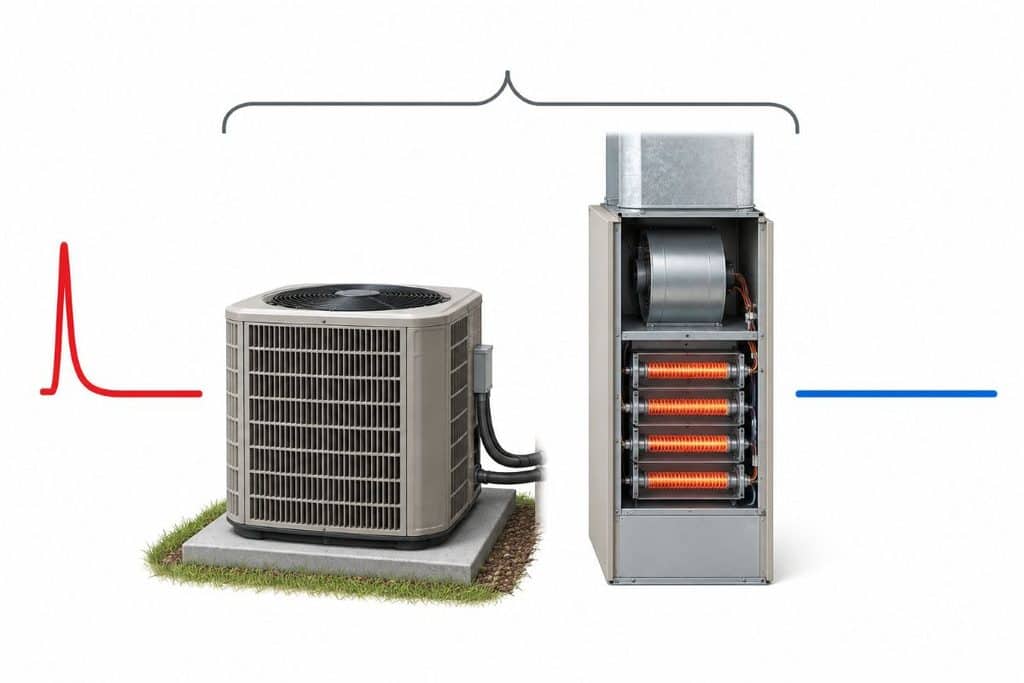
The real question is whether the generator runs the strips. A lockout or a managed module keeps them off generator power and lets the heat pump coast on the compressor, which holds the size down. Drop the strips, though, and the house leans on the compressor in the cold, when a heat pump delivers the least.
Winter outages here are not hypothetical. Five days after the December 1, 2006 storm, about 60,000 Ameren customers in the St. Louis region were still without power, after about 323,000 were restored.
Can a Whole House Generator Charge an Electric Vehicle?
Yes, but a Level 2 charger set to 40 amps draws 9.6 kW continuously. The generator has to carry that on top of everything else, or load management has to shed or turn down the charger while the home runs on backup.
There are three ways to handle it. The first is to size into the high demand tier so the charger simply runs alongside everything else during the outage. The second puts the charger on a managed module that sheds it whenever output runs short.
The third is simplest. Dial the charger’s amperage down on the EVSE while the generator carries the house.
The 9.6 kW figure is simple arithmetic: 240 volts times 40 amps, not the 50 amp breaker. EV charging counts as a continuous load, so its circuit is protected at not less than 125 percent of the equipment’s maximum load under NEC 625.41. That margin is the reason. A 40 amp charger lands on a 50 amp circuit.
What Does the NEC Require for Standby Generator Capacity?
The NEC sets standby generator capacity by transfer method. With manual transfer equipment, the generator carries only the loads the owner chooses to run at one time. Automatic transfer requires capacity for the full load the switch connects, unless a load management system caps it. These rules sit in NEC Article 702, which governs optional standby systems.
The table sorts the three setups by what each one has to be sized to carry.
| Transfer Method | Capacity Basis | Who Chooses the Loads |
|---|---|---|
| Manual transfer | Sized for the loads the owner runs at one time, not the whole home | The owner selects which circuits are energized |
| Automatic, full load | Sized for the entire load the switch connects, found with a standard load calculation | The transfer switch energizes everything downstream automatically |
| Automatic with load management | Sized for the maximum load the management system will allow at once | The system sheds or locks out lower-priority loads to stay under the limit |
One rule holds across all three. The system needs transfer equipment between the generator and the utility service, and that equipment isolates the two sources. It is what stops the generator from back feeding the Ameren line during an outage, the hazard that puts a lineworker on that circuit at risk. The capacity basis changes with the method, but the isolation requirement never does.
Can Load Management Let You Install a Smaller Generator?
Yes. A load management system sheds or locks out large loads as generator output nears its limit. The code then lets an automatically transferred generator be sized to the maximum load that system allows, not the full home load.
These are the loads a module watches first, because each is large enough to tip a generator into overload on its own.
- Central air conditioner: the biggest motor load and the usual first candidate to shed.
- Electric dryer: a heavy resistance load that runs in long cycles.
- Electric water heater: another resistance load that can wait out a shed window.
- EV charger: a steady multi-kilowatt draw a module can pause or dial back.
- Electric range: shed during peak draw, restored once the surge passes.
The system ranks loads and drops the lowest priority ones as output approaches the limit. The 702.4(A)(2)(b) sizing allowance lets the generator match the maximum load the module will connect, as long as the module meets 750.30. The payoff is a smaller, cheaper unit.
The catch is that shed loads cannot run together. The air conditioner cycles off when the dryer runs, a real problem in a multi day summer outage. Management works best when one or two large loads run only occasionally. It works poorly for an all electric home on heat strips, because the load you cannot shed is the one keeping the house warm.
Does Natural Gas or Propane Change Generator Output?
Yes. Air cooled standby generators make less power on natural gas than on propane, so Generac’s 22 kW air cooled model delivers 19.5 kW on natural gas. It carries a whole home only when the calculated peak, after summer temperature derating, stays under that figure.
On Spire natural gas the unit runs through a multi day outage without refueling, as long as utility gas pressure holds. The limit becomes maintenance. Generac requires an air cooled unit to shut down at least 30 minutes after every 24 hours of continuous running.
| Model | LP Rated kW | NG Rated kW | NG Output Amps at 240V |
|---|---|---|---|
| Generac 7042 (22 kW) | 22 kW | 19.5 kW | 81.3 A |
| Kohler 20RCA | 20 kW | 18 kW | 75 A |
The number on the box is the propane rating. Size against the natural gas figure instead, since it is lower. The Generac 7042 is 22 kW on propane but 19.5 kW on gas, and the Kohler 20RCA is 20 kW on propane and 18 kW on gas.
Then apply the spec sheet’s derate line, because each unit loses output differently in heat. The Kohler 20RCA derates 2 percent for every 10 degrees above 60°F. At a St. Louis summer design temperature of 96°F, its 18 kW gas rating falls to about 16.7 kW.
The Generac derates more gently, at 1 percent per 10 degrees, so read the figure off the unit you are quoting, not a rule of thumb. The point holds either way. Summer heat pulls output down during the very outages when air conditioning is setting the tier.
Spire has to supply enough gas for the generator, not just the house. Its Eastern Missouri service area covers St. Louis City, St. Louis County, and most of St. Charles County, excluding the portions south of U.S. Highway 61.
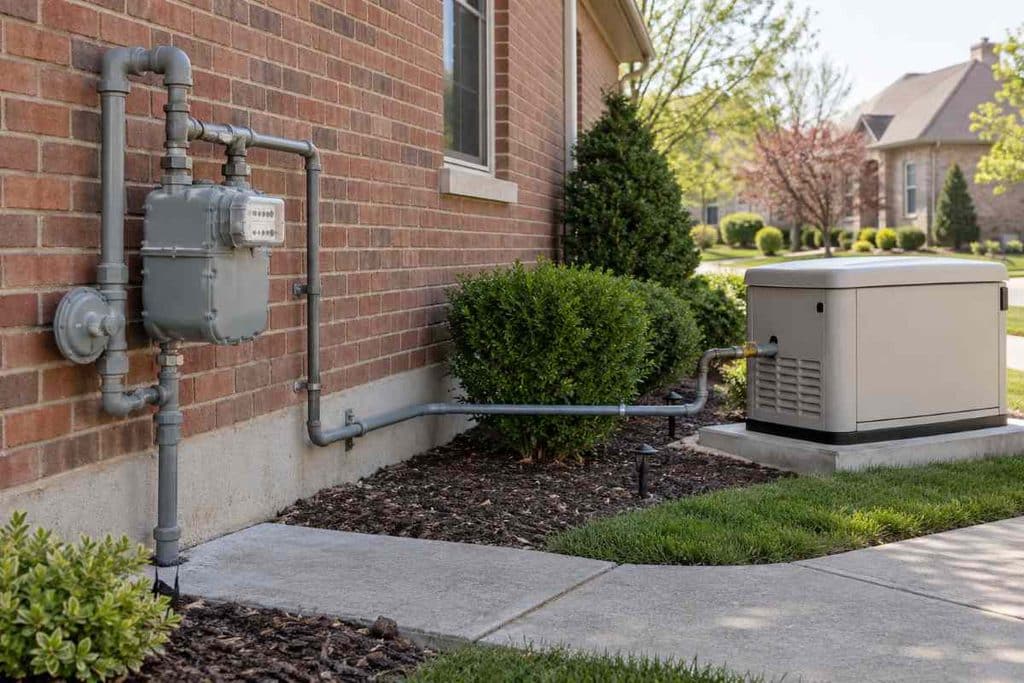
The generator’s gas demand stacks on top of the furnace, water heater, and range already on the meter. A 22 kW Generac burns about 327 cubic feet an hour at full load, enough that the meter or the service line may need an upgrade. Check it before buying.
Natural gas removes the refueling problem. It does not remove maintenance: Generac calls for a 30 minute shutdown after every 24 hours of continuous running, plus an oil and filter change at 200 hours. That interval drops to 100 hours in sustained heat above 85°F or cold below 40°F.
One scope line matters. The gas piping and meter work belong to a licensed plumber, and Pure Home Electric handles the electrical side only.
How Do You Calculate Generator Size for Your Home?
Size a standby generator by adding the running watts of the loads it must carry, adding the largest motor’s surge on top, and choosing a unit whose derated output on your fuel clears that peak. The load basis comes first, set by your transfer method. It is every load behind a whole home automatic transfer switch, or only the loads you choose under manual transfer or a management cap.
Get it wrong in either direction and it shows. An undersized unit overloads and shuts down, or its voltage sags when the compressor starts. An oversized one costs more and pulls more gas than the home needs.
Work the four steps in order, because each one feeds the next.
- Set the load basis. With a whole home automatic transfer switch and no load management, the basis is every load the switch connects, which the code counts as the full automatically connected load under 702.4(A)(2)(a). With manual transfer it is the loads you run at one time, and with load management it is the maximum the system allows.
- Record the running watts. Pull the running watts for each load in the basis from its nameplate, and use the panel schedule to find the 240 volt circuits. Treat a breaker rating as a ceiling, not a running load, because sizing from breaker size overstates the real draw.
- Add the largest surge. Find the biggest motor, usually the AC compressor, and add its starting surge above its own running draw to the running total.
- Compare against derated output. Match that peak to the unit’s rated output on your fuel, after the temperature derate, and confirm the derated figure still clears the peak.
The formula is one line. Peak equals total running watts, plus the largest starting surge above that appliance’s own running draw, divided by 1,000 for kilowatts. Picture a home at 13,000 running watts, its AC compressor adding 6,000 watts of surge. The peak lands at 19 kW, which the unit has to clear on its fuel after derating.
A sizing margin on top is an engineering convention, not a code requirement. The step that matters most is the surge: skip it and the generator sags voltage the moment the compressor starts, which is the failure this sequence is built to prevent.
How Does Your Electrical Service Size Affect the Generator?
Service size sets the transfer switch rating, not the generator kW. A whole home automatic transfer switch on a 200 amp service is rated 200 amps. Yet a 19.5 to 22 kW generator produces only about 81 to 92 amps at 240 volts, so the load calculation, not the panel amperage, decides the generator size.
These are two different numbers that homeowners often merge. The transfer switch has to match the service: a 200 amp service takes a 200 amp switch, and many older St. Louis homes on 100 amp service take a 100 amp switch.
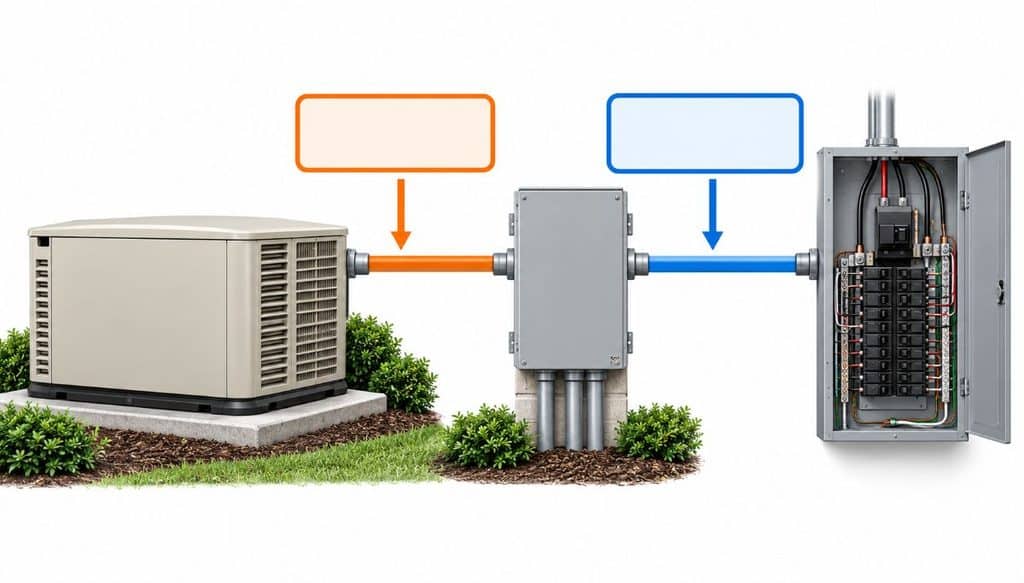
The generator’s output amps are a separate figure. Multiply its kW rating by 1,000 and divide by 240 volts. A 19.5 kW unit puts out about 81 amps, far below the switch rating it runs through.
Sequence matters when an upgrade is coming. If a panel or service upgrade is planned, for an EV charger or a second air conditioner, do it before the load calculation. That way the generator is sized for the home the house is becoming, not the one it is replacing.
Do You Need a Load Calculation Before Buying a Generator?
Yes, for any automatically transferred standby generator. The NEC requires its capacity to cover a load calculated under Article 220, or by another approved method, so online calculators and square footage charts only narrow the range.
In St. Louis County the installation also needs an electrical permit. The County issues it in unincorporated areas and in the municipalities that contract with it, or the city issues it where a municipality runs its own electrical permitting.
A site load calculation works from the home’s actual loads, not a chart. These are the inputs it pulls together.
- Panel schedule review, to see every circuit and find the 240 volt loads.
- AC tonnage and compressor LRA, for the largest starting surge.
- Heat strip kW, read off the air handler nameplate.
- Resistance appliances: electric water heater, range, and dryer.
- EV charger, at its set amperage.
- Transfer method and load management choice, which fixes the backed loads.
- Fuel type and whether Spire can supply the added demand.
- Ameren demand history for the home, where it is available.
The default path is an Article 220 calculation, and the code also allows another approved method. The calculation is done under a Missouri licensed Electrical Contractor and goes to the authority having jurisdiction with the permit. That is the step a square footage chart cannot replace.
For a home that already exists, the code offers a shortcut under 220.87, the measured demand method. It reads the home’s actual maximum demand over a full year. If a year of data is not on hand, a recorded 30 day stretch at 15 minute intervals stands in.
The math then runs one way. The existing demand at 125 percent, plus whatever new load the generator must carry, has to stay within the service rating.
That method needs demand data in kilowatts, not the monthly kilowatt hour totals on a utility bill, and it is off the table for a home running solar, wind, or any peak load shaving.