
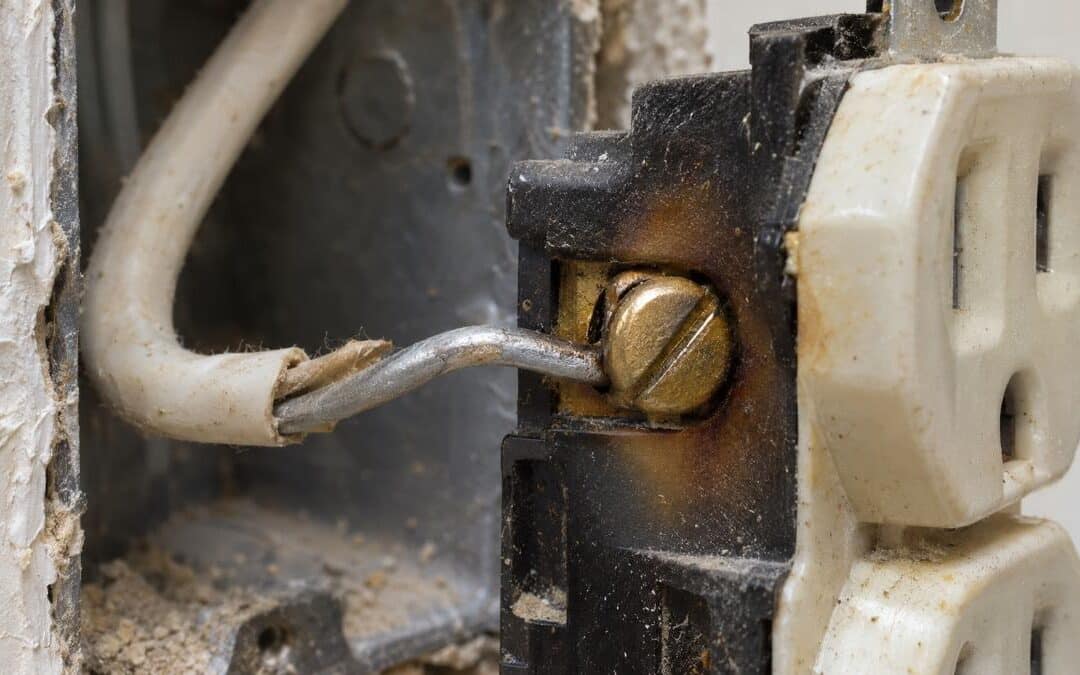
Aluminum branch-circuit wiring is solid aluminum conductor cable that feeds the receptacles, switches, and lights on a home’s general-purpose circuits. Its hazard sits at the terminations, the points where each conductor lands on a device or meets another wire in a splice. Those joints deteriorate, their resistance climbs, and the current flowing through turns that resistance into heat. The cable between them is rarely the problem.
If you own an older house, or an inspection flagged aluminum, the era is the first clue. Cable like this went into new homes, additions, and rewired circuits between 1965 and the mid 1970s. A house from that window is worth checking.
Telling whether a house has it, reading why the connections fail, and spotting a failing one all come before the fix. The repair that holds is the one the U.S. Consumer Product Safety Commission recognizes as permanent.
That is the destination here.
What Is Aluminum Branch-Circuit Wiring?
Aluminum branch-circuit wiring is the aluminum wire that runs a home’s everyday circuits, the ones behind the outlets, switches, and light fixtures. It is single-strand aluminum, installed in a specific window that the next part covers. Not every aluminum wire in a house counts.
Three kinds of aluminum fall outside the term. The heavy aluminum feeding the main service, an electric dryer, or a range is one, and copper-clad aluminum, which is aluminum with a copper coating, is another. The U.S. Consumer Product Safety Commission repair guidance does not cover any of those.
Two things make a wire count: where it runs and when it went in. This wiring reached everyday circuits in new homes, additions, and rewired circuits between 1965 and the mid 1970s. So the era is the tell. A house from that window can carry it, even in one remodeled room.
Two things decide whether this wiring carries the known risk: the wire and the device it lands on. National Bureau of Standards researchers drew that line. They called one side older-technology wiring: aluminum conductor that fails the Underwriters Laboratories requirements for solid aluminum wire effective May 1, 1971, or a device not rated CO/ALR, or both.
A CO/ALR device is a switch or receptacle built for direct connection to aluminum wire. The hazard rides on the pair, not on the metal alone.
Aluminum branch conductors are not banned. Current codes still permit them in the newer alloys that came after that era, landed on devices rated for aluminum. What changed was the alloy and the device rating, not permission to run aluminum at all. The older-technology pairing is what the repair guidance targets.
Is Aluminum Branch Wiring a Fire Hazard?
Yes. Homes built before 1972 and wired with aluminum are 55 times more likely than copper-wired homes to have one or more connections at outlets reach fire hazard conditions. That number comes from a Franklin Research Institute survey done for the Consumer Product Safety Commission.
Fire hazard conditions is not a loose phrase here. The survey set three marks for it. A connection reached that state when the cover plate mounting screws hit 149 degrees Celsius, which is 300 Fahrenheit, or the receptacle threw sparks, or the material around it charred. Any one of the three met the mark.
The finding does not say these homes are 55 times more likely to catch fire. It measured connections at outlets reaching those three conditions, and the survey looked at outlet connections only. That is the narrower claim, and the one the data supports.
Damage at these connections builds up; it does not reset. The deterioration processes raise the connection’s resistance over time, and each round of heating leaves the joint a little worse than before. Higher resistance means more heat at the same everyday current, so a connection that ran warm last year can run hotter this year with nothing new plugged in.
A failing aluminum connection rarely warns you first; these connections seldom give easily detected warning signs. A quiet outlet is not proof of a sound one, and the absence of symptoms says nothing about the connection behind the cover.
Why Do Aluminum Wire Connections Fail?
Aluminum connections fail because the metal expands with heat, relaxes under clamping pressure, and grows a hard oxide that insulates. The terminal loosens, its resistance climbs, and that resistance turns normal current into heat at the joint.
Four properties of aluminum drive this, all four named by National Bureau of Standards researchers. It expands and contracts more than the terminal holding it, so each warm-up and cool-down works the connection a little looser. It also creeps, relaxing away from the pressure meant to hold it tight. And its surface grows a hard, non-conducting oxide film.
And it resists current more than copper to begin with. Put the four together and a once-snug connection loosens, its contact resistance rises, and the current passing through heats the joint. The heat sits at the connection, not along the wire.
One pairing fails more than any other: older-technology wire on receptacles with steel binding screws. National Bureau of Standards testing found that combination the most prone to failure. Steel and aluminum expand at different rates, so they work the connection loose faster than a matched pair would. Older-technology wire is the pre-1971 aluminum covered earlier.
A loose connection can glow, and the panel misses it. In National Bureau of Standards lab tests on 120-volt, 15 and 20 ampere branch circuits, visible glows appeared with both copper and aluminum wire. Those glows did not blow fuses, trip breakers, or operate a ground fault interrupter.
Glowing is a loose-connection effect, not something unique to aluminum. It shows up wherever a joint goes loose enough, copper included. Aluminum just reaches that loose state sooner, because of the four properties that work its connections loose in the first place.
How Can You Tell If a House Has Aluminum Wiring?
Aluminum branch cable looks like ordinary plastic-sheathed cable, so the jacket marking is what gives it away: “Al” or “Aluminum” printed every few feet where cable is already exposed. Confirmation at the outlets, switches, and panel is work for a qualified electrician.
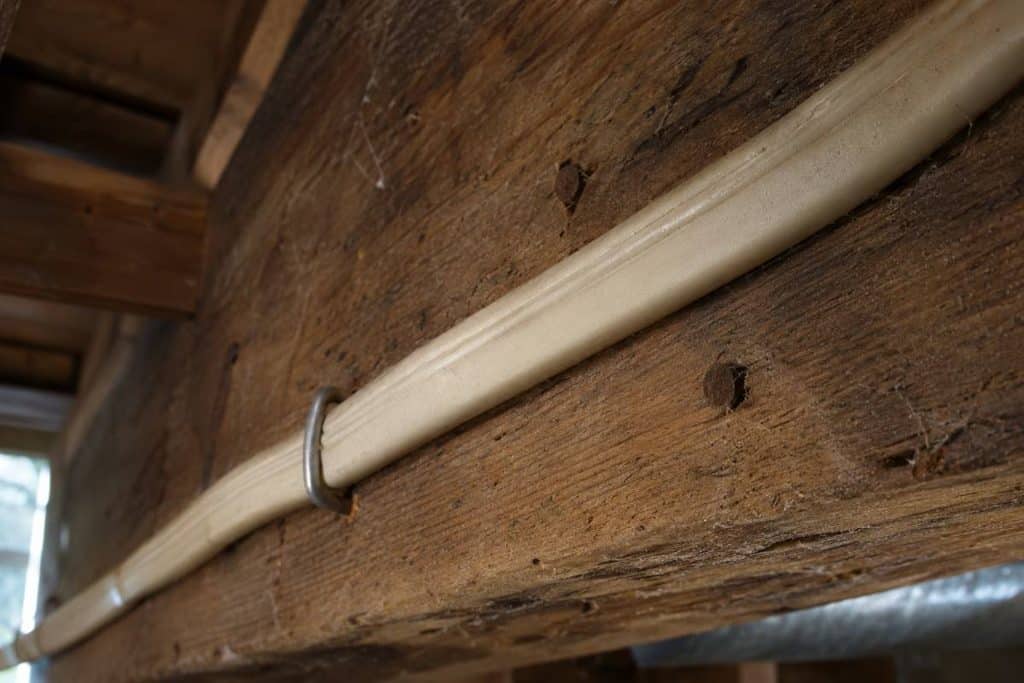
A homeowner can spot the signs below by looking, without opening anything.
- The jacket marking: aluminum cable carries “Al” or “Aluminum” stamped along one side, repeating every few feet.
- Where it shows: on cable already exposed in an unfinished basement, attic, or garage, with nothing opened.
- A low-angle flashlight: faint embossed letters read more clearly when light skims across the jacket surface.
None of these reads the outlets, switches, or panel, and none needs to. If the marking is unreadable, or nothing is exposed to check, a qualified electrician makes the determination. The device-level check stays professional work.
The build era is the other clue, and it is not bound by the year on the deed. A house finished later can still carry an aluminum addition or a circuit rewired during the 1965-to-mid-1970s window. So a newer home is not automatically clear.
One marking flips the answer: “CU-clad” or “Copper-clad,” stamped right alongside “Aluminum” on the same jacket. That cable is aluminum with a copper coating, a different product outside the CPSC repair recommendations, which is why “Aluminum” alone is not the finish line.
What Are the Warning Signs of a Failing Connection?
CPSC names four warning signs at a failing connection: cover plates hot to the touch, flickering lights, circuits that stop working, and the smell of burning plastic at an outlet or switch. Any one of them is reason to have a qualified electrician find the cause.
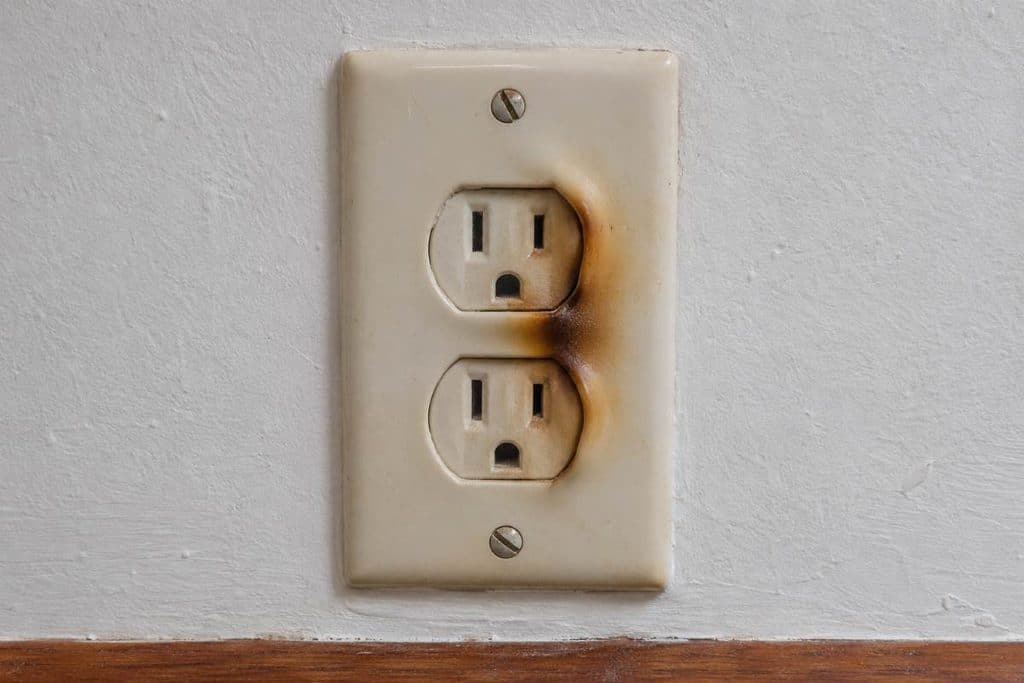
Each sign is something a person notices in normal use, not something found by opening a device.
- Faceplates warm or hot to the touch, with nothing heavy drawing through them, mean heat is coming from the connection behind them.
- Flickering or dimming on a circuit is a connection making and losing contact, worst when it repeats or spreads.
- Dead circuits: an outlet, or a run of them, that stops where a loose connection has finally opened for good.
- A sharp melted-plastic smell at an outlet or switch is insulation overheating at the joint, the sign that most demands a fast call.
None of these is a repair cue. Each is a reason to stop and bring in a qualified electrician, and CPSC’s guidance is direct: have one determine the cause, and do not try to do it yourself. The diagnosis happens inside the box, which is professional work. The homeowner’s job ends at noticing the sign and making the call.
How Is Aluminum Wiring Permanently Repaired?
The permanent repairs CPSC accepts come down to three: full replacement with copper cable, COPALUM crimp pigtailing, and AlumiConn set-screw pigtailing. Both pigtail methods leave the aluminum in the walls and join a short copper lead to each aluminum conductor end.
What Does a Full Copper Rewire Involve?
A full rewire pulls out the aluminum branch circuits and runs new copper cable in their place, which removes the primary cause of the hazard: the aluminum itself. CPSC calls it the best method available, and in the same breath notes it is often impractical or prohibitively expensive.
The cost and disruption come from where the cable lives. Branch wiring runs inside finished walls and ceilings, so a rewire means opening paths to pull new copper through, then closing them back up. The old aluminum is usually left abandoned in the walls. That is why a rewire fits a renovation that already has the walls open, and feels steep as a standalone job.
What Is the COPALUM Crimp Repair?
A COPALUM repair joins a short copper pigtail to each aluminum conductor inside a metal sleeve, which a purpose-built power tool and die crimp into one permanent connection, in effect a cold weld. Only electricians trained by the manufacturer are authorized to install it.
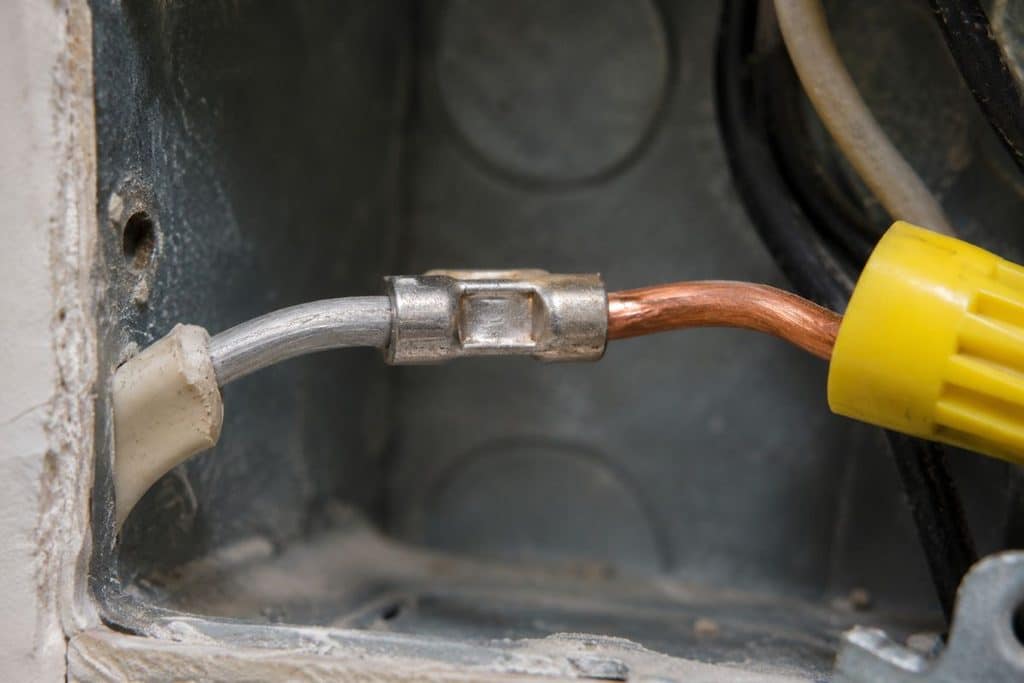
The strength of the joint comes from the crimp. Precision dies compress the sleeve and both wires with upwards of 10,000 pounds of force, cold-welding copper to aluminum so the joint cannot loosen. The Commission recognized COPALUM and AlumiConn in 2011 as the only products meeting its standards. But CPSC notes the tools go only to manufacturer-trained electricians, which is why the method can be hard to find locally.
What Is the AlumiConn Connector Repair?
An AlumiConn repair pigtails each aluminum conductor to copper inside a set-screw lug connector, the method CPSC accepts as the alternative to COPALUM. A set screw clamps each wire in its own port. CPSC added a 2011 caveat: the connector was then too new for a long-term track record, and had performed well only in initial tests.
What the method depends on is the torque. Tightening the set screw to the manufacturer’s specification breaks through the oxide film and holds the wire in a low-resistance grip. Left too loose, the joint starts down the same path a failing aluminum connection does. The Commission recognized AlumiConn alongside COPALUM in 2011, so a correctly torqued repair carries CPSC’s acceptance as a permanent fix.
Are CO/ALR Outlets or Wire Nuts a Safe Fix?
Neither counts as a permanent repair. CPSC staff consider a CO/ALR swap, meaning switches and receptacles rated for direct connection to aluminum wire, at best an incomplete repair. A house fixed only this way has not been permanently remediated.
Two things keep it short of permanent. CO/ALR devices failed CPSC laboratory tests that simulated actual use conditions, and they do not even exist for every connection, such as permanently wired appliances and ceiling fixtures. Those joints stay untouched, so a code-compliant swap is still not the permanent fix CPSC recognizes, even though current codes require the CO/ALR mark on a device wired directly to aluminum.
Twist-on connectors are a different story with the same answer. They are sold rated for joining aluminum to copper, but that rating does not make them a CPSC-recommended repair.
CPSC does not recommend pigtailing aluminum to copper with twist-on connectors. In CPSC-sponsored lab and life tests, substantial numbers of them overheated severely. A connection that overheats is the exact failure a repair is supposed to end, so the method leaves the hazard it was meant to remove.
Should You Rewire or Pigtail Aluminum Wiring?
The choice is between removing the aluminum with a full copper rewire and repairing every termination in place with a COPALUM or AlumiConn pigtail. It turns on wall access, installer availability, and how many terminations a house has; of the two pigtails, only trained electricians install COPALUM, and AlumiConn carries the shorter CPSC record.
So the pigtail decision is often a swap: the longer-proven method is the harder one to book, the easier one to book the less proven.
| Method | What stays in the walls | Who installs it | CPSC long-term record | Main cost driver |
|---|---|---|---|---|
| Full copper rewire | Nothing; the aluminum is abandoned and copper replaces it | Any qualified electrician | Removes the primary cause; CPSC’s best method | Wall and ceiling access |
| COPALUM pigtail | All the aluminum, with a copper lead crimped at each end | Only manufacturer-trained electricians | Long, CPSC-recommended record | Number of terminations, plus installer availability |
| AlumiConn pigtail | All the aluminum, with a copper lead set-screwed at each end | Any qualified electrician | Accepted alternative; shorter record noted in 2011 | Number of terminations |
Which Electrical Code Applies in Greater St. Louis?
The code depends on the address. Across Greater St. Louis the three jurisdictions sit on different NEC editions, so a repair answers to the one in force where the house is.
The City of St. Louis works to the 2017 NEC under Ordinance 70802, and St. Charles County to the 2020 NEC with local amendments. St. Louis County runs on an older edition, the 2014 NEC recorded in its own Code Enforcement history.
One office settles which edition applies. It is the authority having jurisdiction, or AHJ: the local building or code-enforcement office that permits and inspects the work at the address. That office applies its adopted edition and confirms which is current, since a county can move to a newer code between projects. So a repair meets the standard the AHJ enforces where the house sits.
Is a House With Aluminum Wiring Safe to Buy?
A house with aluminum branch wiring is safe to buy once its connections have had one of the three CPSC-accepted permanent repairs, or the buyer plans for one. CPSC recommends a permanent repair wherever the wiring has not been remediated, and a sound repair covers every connection in the home, not a sample.
So the questions for the seller are specific. Ask which method was used, whether it reached every connection, and whether the work carries an AHJ permit record. A repair done at only some connections leaves the fire hazard live at the ones skipped. Some insurers ask for that documentation before they will write a policy, though the requirement varies by carrier, so confirm it before closing.
Aluminum is rarely the only legacy system in an old house. A buyer is wise to have an older home checked for other legacy wiring systems in older homes, such as knob-and-tube and ungrounded two-prong circuits. Cleared of those, and with the aluminum documented, the house becomes a known quantity.